Beschreibung
Molentargius, which was the richest Sardinian basin for sea-salt extraction for two and a half centuries - an activity that ceased in 1985 - has become one an important resting and nesting sites for aquatic birds. The Molentargius Saline extends across 1,600 hectares near the city of Cagliari. There are many bigger an smaller lagoons you can visit. But note that a large proportion has been blocked off as restricted areas. You can't really walk a loop. Many sections are closed off or offer poor visibility. So, this is not an area for easy birding, as you have to put in a lot of effort to spot the birds. That's why this area has a Green (B) and not a Red (A) marker.
Of interest is the smaller lagoon of Stagno Perdabianca (1) and the two main lagoons. Bellarosa Maggiore (2) is a large brackish lagoon and Bellarosa Minore (3) to the north east, is a smaller freshwater lagoon. In between the lagoons, there are numerous reed-filled freshwater pools and canals. Also of interest is the southern lagoon (4).
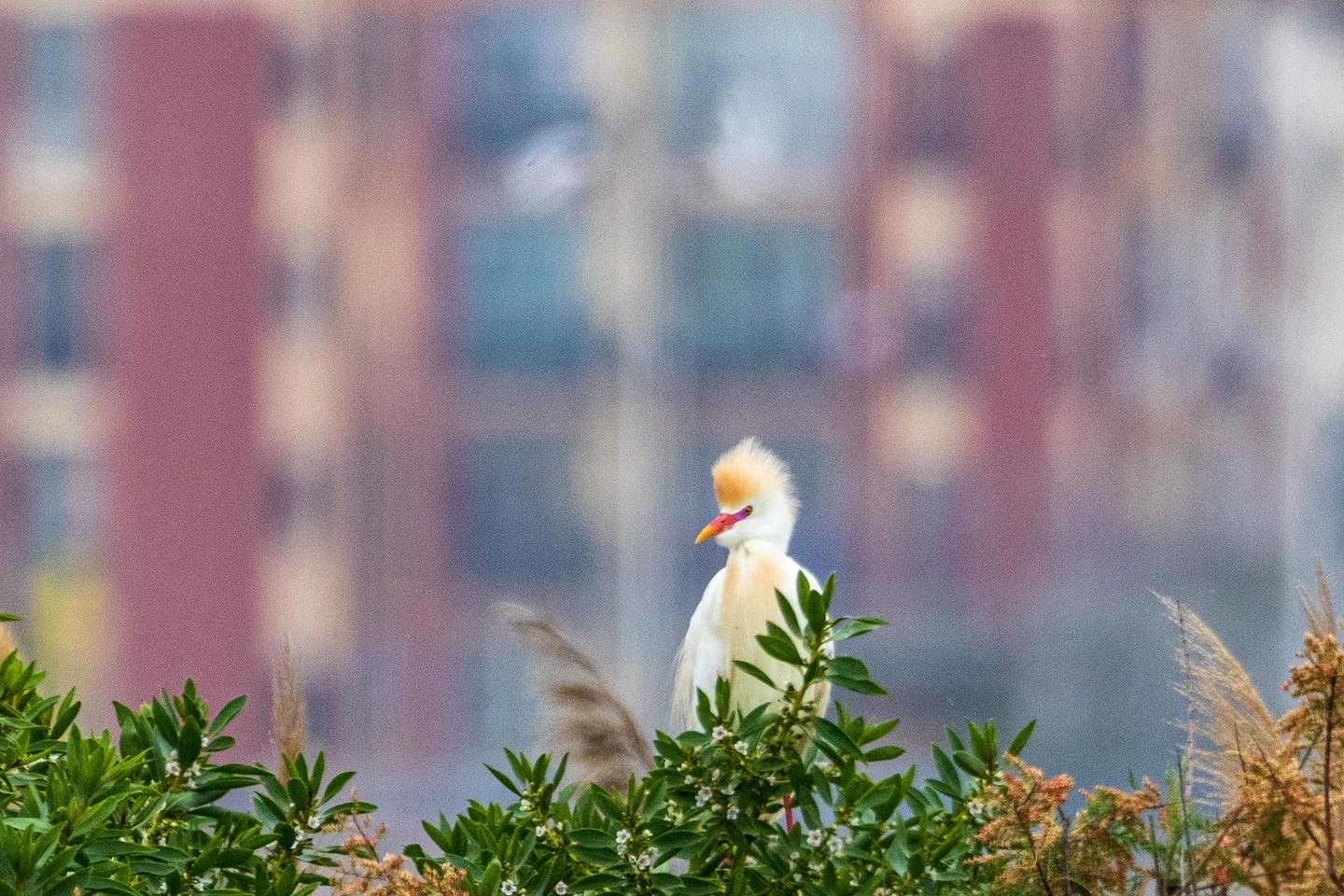
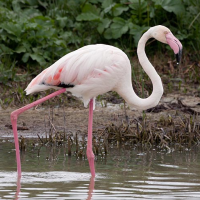
In the Stagno Perdabianca Rosaflamingo can often be observed from a short distance. A Kuhreiher colony with a small observation platform is located on Viale della Fauna, just northeast of the observation tower.
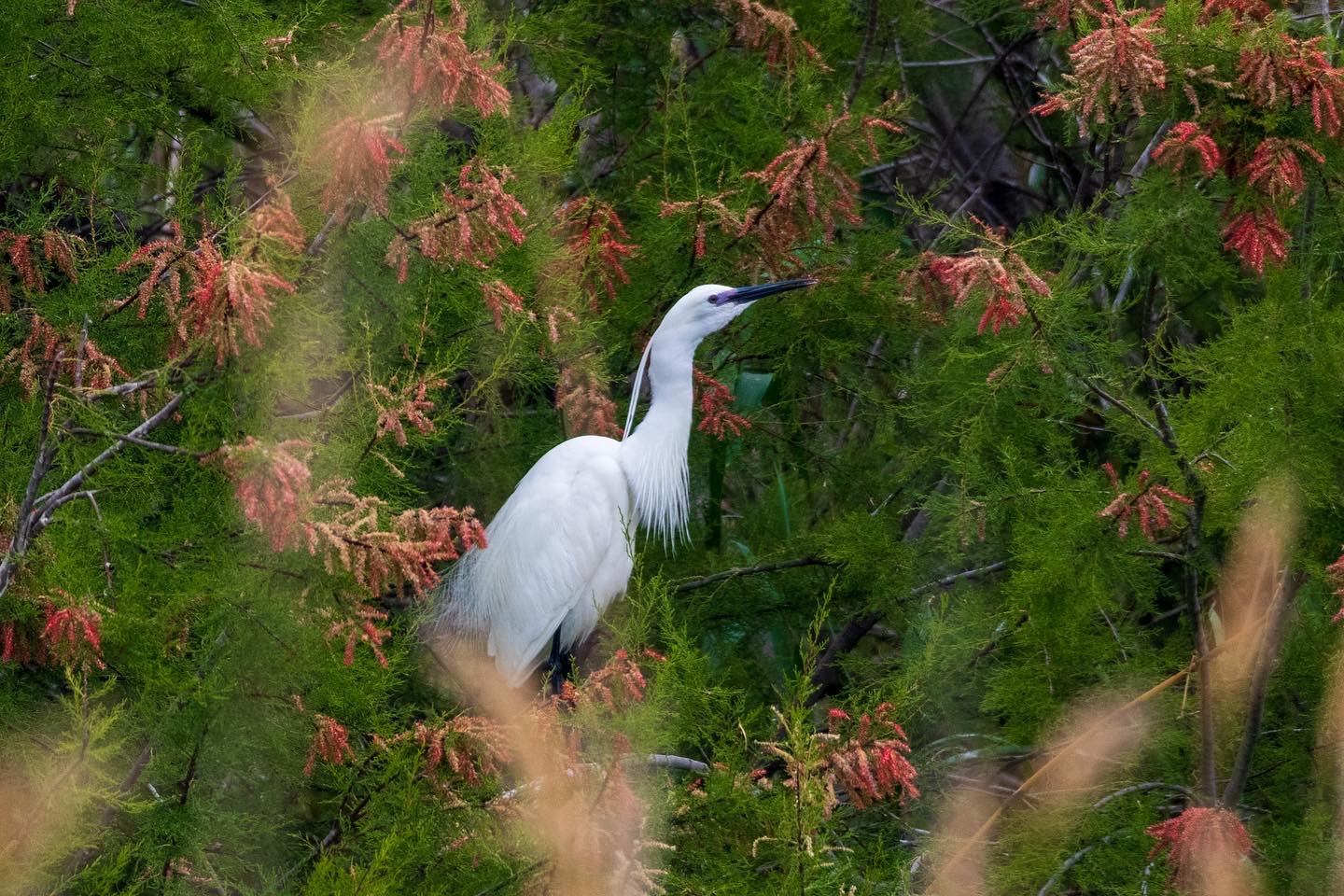
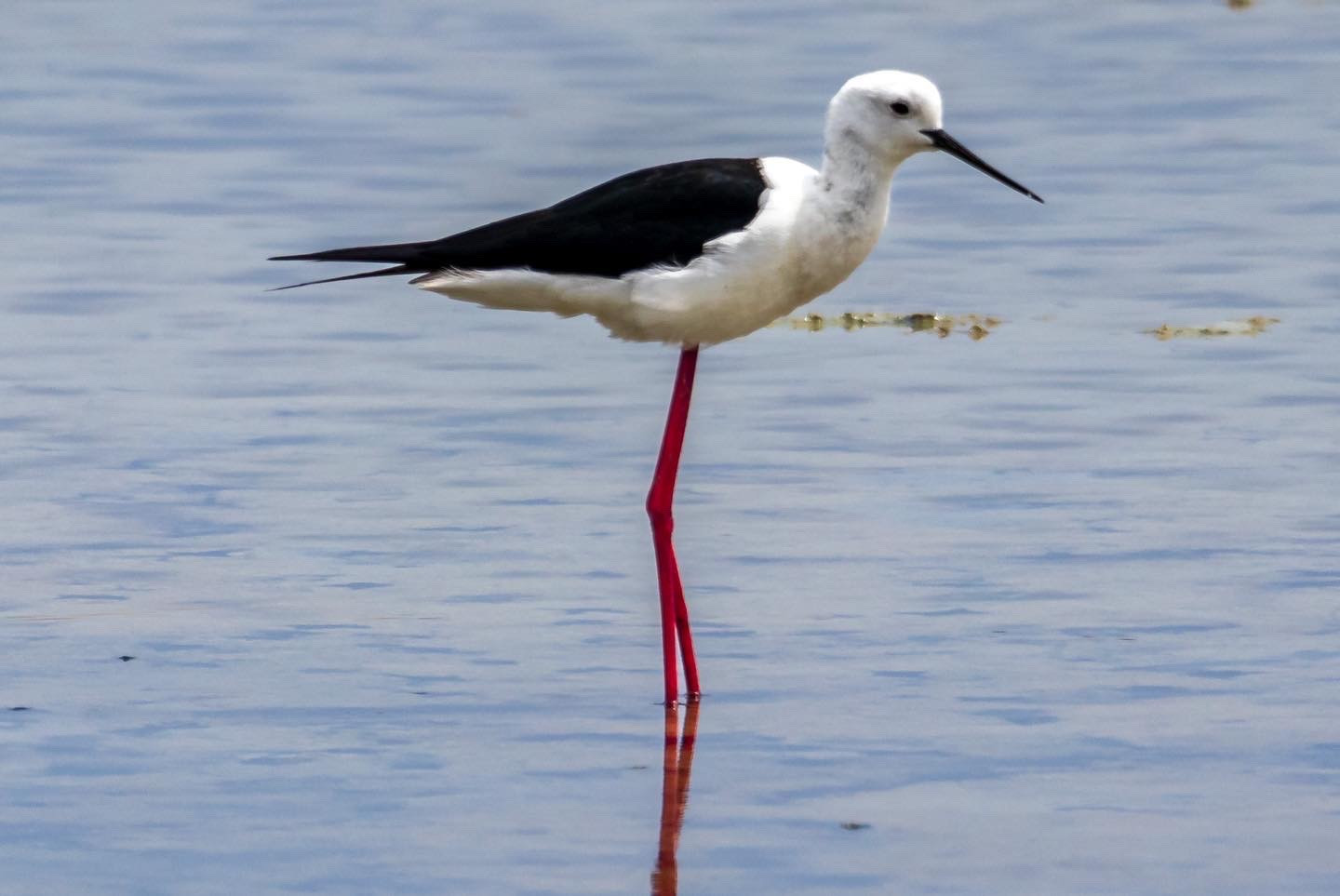
On the embankment of Bellarosa Maggiore Rosaflamingo and Dünnschnabelmöwe nest. The reed of the Bellarosa Minore is a refuge for nesting birds as Kuhreiher, Stelzenläufer, Seidenreiher and numerous species of ducks. With a little luck, you will see Purpurhuhn, with its metallic blue plumage and scarlet red beak.
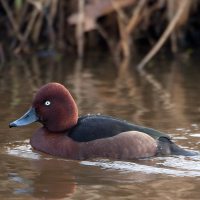
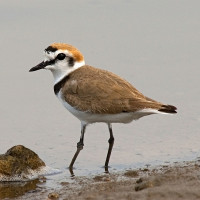
Other interesting breeding birds are Rallenreiher, Purpurreiher, Nachtreiher, Lachseeschwalbe, Zwergseeschwalbe, Moorente, Säbelschnäbler, Rohrweihe and Seeregenpfeifer.
The lagoons are also very good for migrant species, including Sichler, Löffler, Knäkente, Dunkler Wasserläufer and plenty of other waders. Wintering species include Kolbenente and Löffler.
Details
Zugang
Parco Naturale Molentargius Saline is located directly east of the city of Cagliari. A good option is to park on the south side of the area near Stagno Perdabianca. Press P on the map for directions. From the city you can discover the Molentargius Saline through the pedestrian / bycycle path that runs along the port, or by public bus PQ, PF that stops (Generale Rossi stop) at approx 1 km from the visitor center of Via La Palma, there you can rent a bike or enjoy a guide service by boat or train, both electric powered.
 (003).jpg)
 ) Tragen Sie die Vogelnamen in Ihrer Sprache ein. Sie werden automatisch für andere Nutzer übersetzt!