Beschreibung
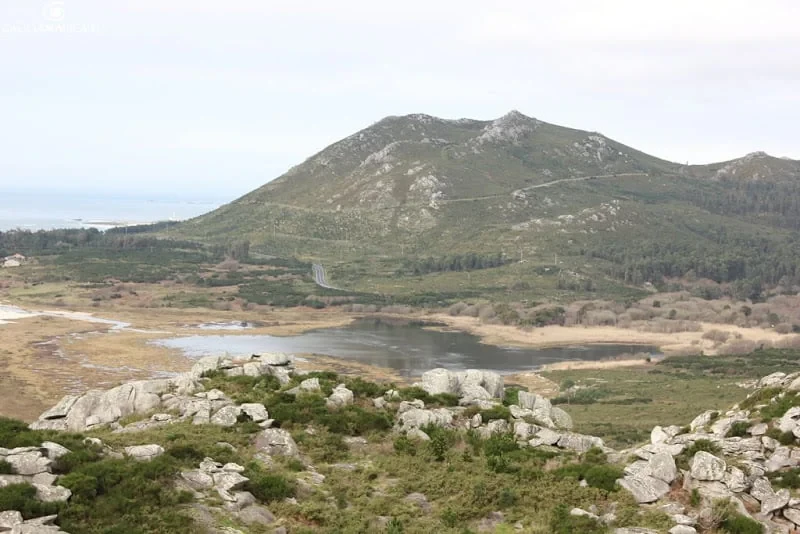
Monte y Laguna de Louro is a beach area with dunes, a lagoon, and nearby pine forests of great geological, botanical, and faunal interest. Reptiles, amphibians, and even otters are abundant. Among the birds, wintering species include Reiherente, Pfeifente, Krickente, Löffelente, Triel, Löffler. In the event of a storm, it is not uncommon to see Tordalk seeking refuge among the coastal rocks.
_________________________
Español: Zona de playa con dunas, laguna y pinares cercanos de gran interés geológico, botánico y faunístico. Abundan los reptiles, anfibios e incluso las nutrias. En cuanto a las aves, destacan las invernantes como Reiherente, Pfeifente, Krickente, Löffelente, Triel, Löffler. En caso de haber temporal, no es infrecuente ver Tordalk buscando refugio entre las rocas de la costa.
Details
Zugang
Monte y Laguna de Louro is located 70 km west of Santiago de Compostela. The AC-550 Noia-Cee road marks the boundary of the protected area. From this road, you reach Area Maior beach, and from there, you can walk to the lagoon. On the map, the letter P indicates the parking areas. Press a P on the map for directions.
_________________________
Español: La carretera AC-550 Noia-Cee limita el espacio protegido. Desde esa carretera llegamos a la playa Area Maior, y de ahí llegamos andando a la laguna. En el mapa la P indica los lugares donde se puede aparcar.
Terrain und Habitat
Wald , Feuchtgebiet , Meer , See , StrandBedingungen
Flach , Sandig , SumpfigRundweg
NeinIst ein Spektiv nützlich?
JaGute Beobachtungszeit
GanzjährigBeste Beobachtungszeit
Herbst , Winter , Frühjahrszug , HerbstzugRoute
unbefestigte Straße , Schmaler PfadSchwierigkeitsgrad der Tour
DurchschnittlichErreichbarkeit
zu FußBeobachtungshütten oder -türme
NeinZusätzliche Informationen
The site can be accessed from Area Maior beach via a path, or from the beach itself through the dunes.
_________________________
Español: Se puede acceder desde la playa de Area Maior por un sendero, o desde la misma playa por las dunas.
 ) Tragen Sie die Vogelnamen in Ihrer Sprache ein. Sie werden automatisch für andere Nutzer übersetzt!