Description
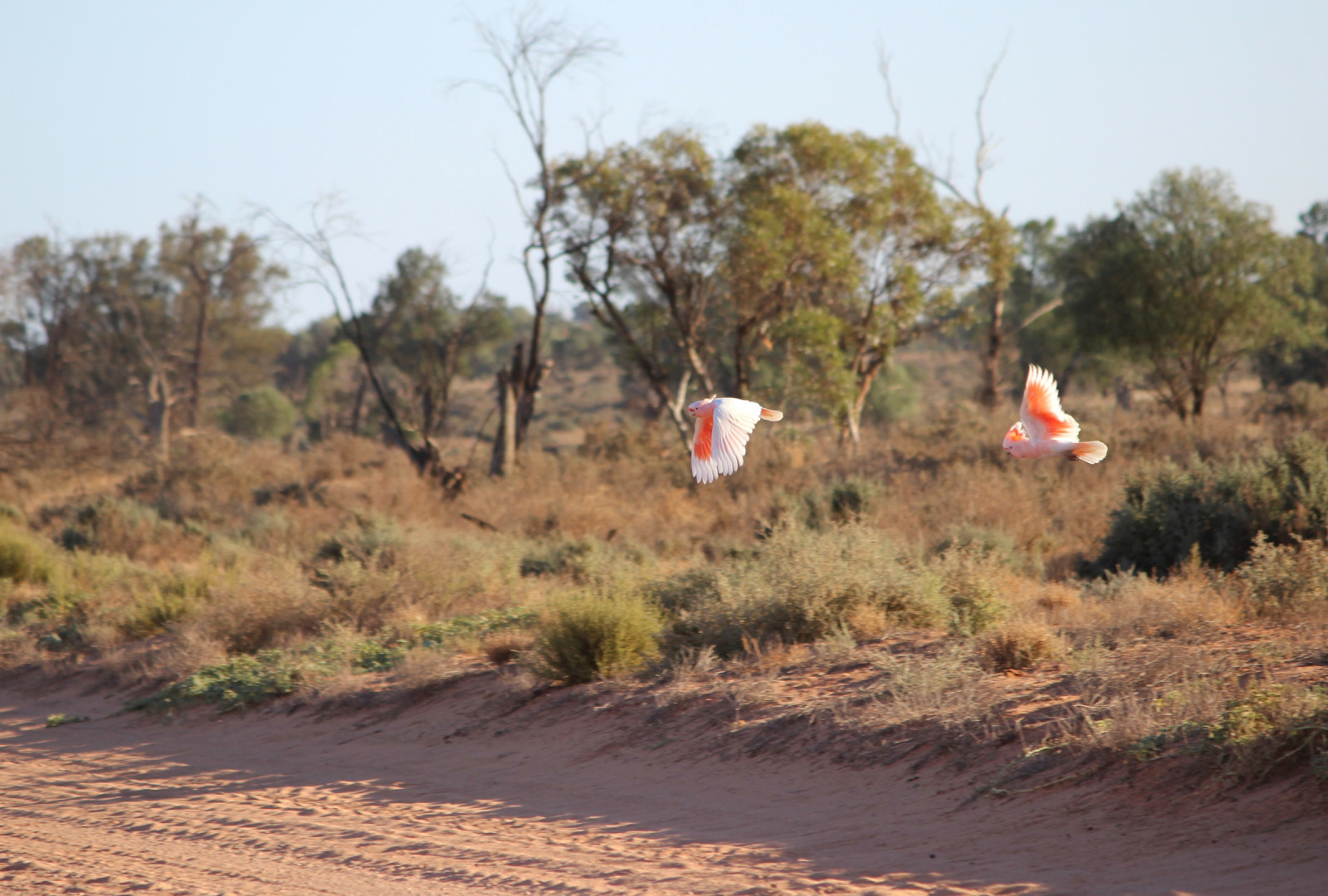
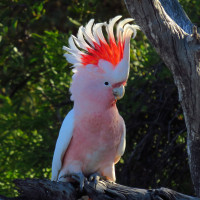
Some of the best, most reliable sightings of Pink Cockatoos anywhere in Australia. Autumn sees some really big flocks of these charismatic cockatoos - I'll never forget seeing them along the red sand roads in the Park. Soft pink against deep red ochre, stunning.
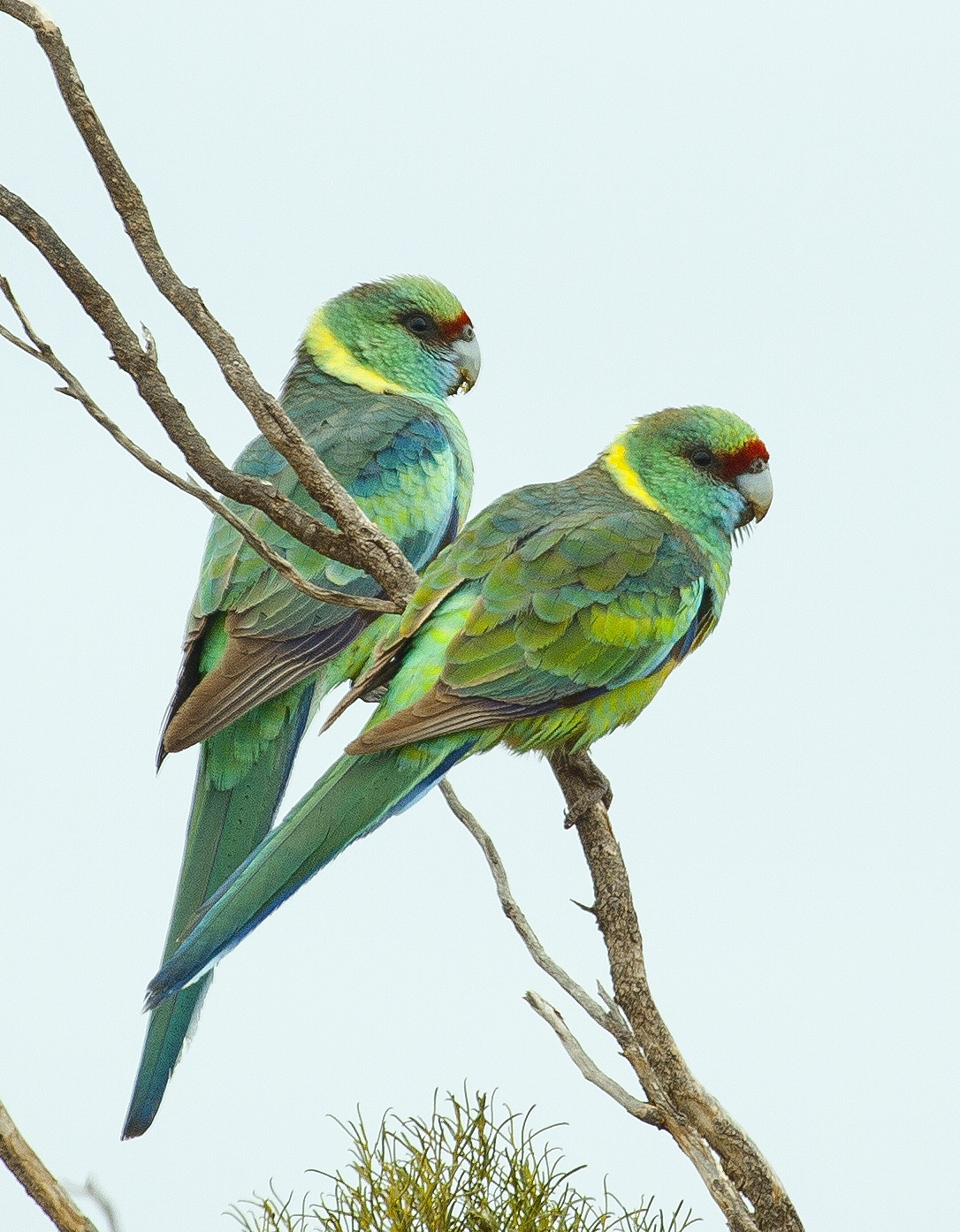
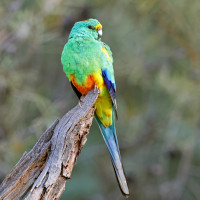
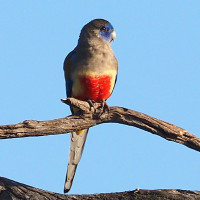
Other parrots galore too - Greater Bluebonnet, Mulga Parrot, Australian Ringneck, Galah. Occasionally, usually after extended wet weather inland, Cockatiel or Budgerigar can be seen here.
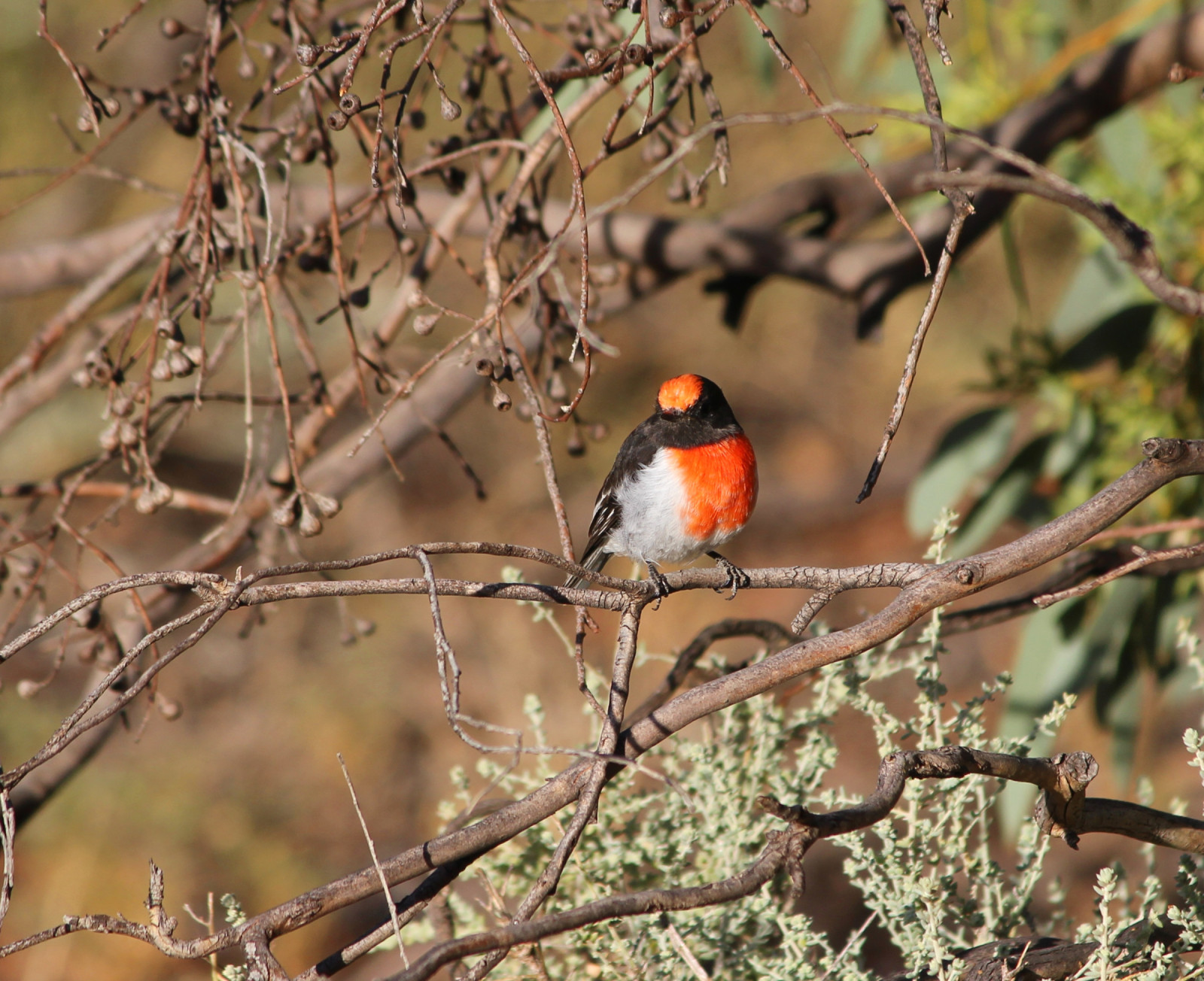
The area is usually very reliable for White-backed Swallow , Emu , White-winged Fairywren , Pied Butcherbird , Chestnut-rumped Thornbill , Apostlebird , Wedge-tailed Eagle , Red-backed Kingfisher , Southern Whiteface , Black-faced Woodswallow and Nankeen Kestrel . Chestnut-crowned Babbler, Crested Bellbird and Chestnut Quail-thrush take a bit of work, but can be found.
Some years the area receives an irruption of a species, and every second bird, it seems, is a Crimson Chat or Orange Chat, Rufous Songlark , Black-tailed Nativehen , Masked Woodswallow , White-browed Woodswallow or White-breasted Woodswallow, Striped Honeyeater or White-fronted Honeyeater or Black-shouldered Kite.
Great sightings can be had on the Foreshore Walk (1 on map) near the visitor information centre. The Grassland Walk through the Main Camp can also be excellent.
If you can, do the Loop Drive slowly around the Park. It's a one way road and can take several hours. Stop anywhere along the road - as the country is quite open, you can take short walks from the car. Definately do the short loop walk at Mallee Stop - this has been a great place for Chestnut Quail-thrush at times.
Vigars Well is another essential stop. Evening (and probably morning) are the best times here, especially if there's water in the well, but it's difficult to reach it early in the morning. I've always been here in the early evening, and it's wonderful to sit quietly and watch birds and kangaroos come in for a drink. The boardwalk is a little too close to the water, people disturb the animals, so I recommend you start looking from the carpark, and approach the boardwalk very slowly and quietly. The walk up to the dunes is terrific too.
Don't let the name ‘Lake Mungo’ fool you. There's no water in the lake. Most years anyway. The Lake is a historic lakebed, one of several in the Willandra Lakes system. This unique landscape is a World Heritage site, preserving some of the world's oldest human culture.
Other wildlife here is fantastic too - Western Grey and Red Kangaroos, Shingleback Lizards, Mallee Military Dragons and Central Bearded Dragons.
Like many inland sites in Australia, it's desert and semi-desert, and conditions for wildlife vary enormously with weather. After extended inland rains, it can be teeming with life - sometimes for years afterwards. Resident birds breed up, and visitors arrive in huge numbers and diversity. But during droughts the wildlife can be wafer thin, challenging to find and in small numbers.
Every trip to Mungo is different to the last.
Details
Access
Access is by car, and the nearest big town is Mildura, VIC 130 km to the southwest. The road is dirt much of the way, and subject to closure after even a small amount of rain. Press P on the map for directions.
Best option is to stay at Mungo Lodge, or camp in the National Park (fees apply). Stay for a couple of days at least.
Summer is much too hot to visit, and you won't find many bird observations at that time of year.
Terrain and Habitat
Scattered trees and bushes , Desert , DunesConditions
Flat , Open landscape , DryCircular trail
YesIs a telescope useful?
NoGood birding season
Spring , Autumn , WinterBest time to visit
Winter , Spring , AutumnDifficulty walking trail
EasyAccessible by
Foot , CarBirdwatching hide / platform
NoExtra info
The human cultural history here is absolutely amazing, and includes some of the earliest records of modern humans outside of Africa. The region is the site of the world's oldest cremation, ancient footprints and complex food-gathering processes (none available for public viewing). See the link below to the Willandra Lakes World Heritage Listing for more information. Take some time in the visitor centre, it has a good display.
The Park is joint managed by the 3 traditional owner groups and NSW National Parks & Wildlife.
National Parks & Wildlife run Aboriginal Ranger guided walks on to the 'Walls of China', which is the only way to access. The famous Walls are an area of eroded dunes with many fossils and remains of extinct megafauna, fireplaces and other signs of habitation. The tour is $50pp and takes about 2 hours, and must be booked in advance. In theory, it runs daily, sometimes twice a day in busy times. Do book early - it can sell out weeks ahead.
Links
- Mungo National Park main hotspot
- Mungo National Park--Lake Mungo hotspot
- Mungo National Park info
- Book Walls of China tour
- World Heritage Listing

 ) to insert bird names in your own language. The birdnames will automatically be translated for other users!