Charger images
Les formats d'image autorisés sont de type jpeg, png ou gif
La taille maximale du fichier doit être de 20MB
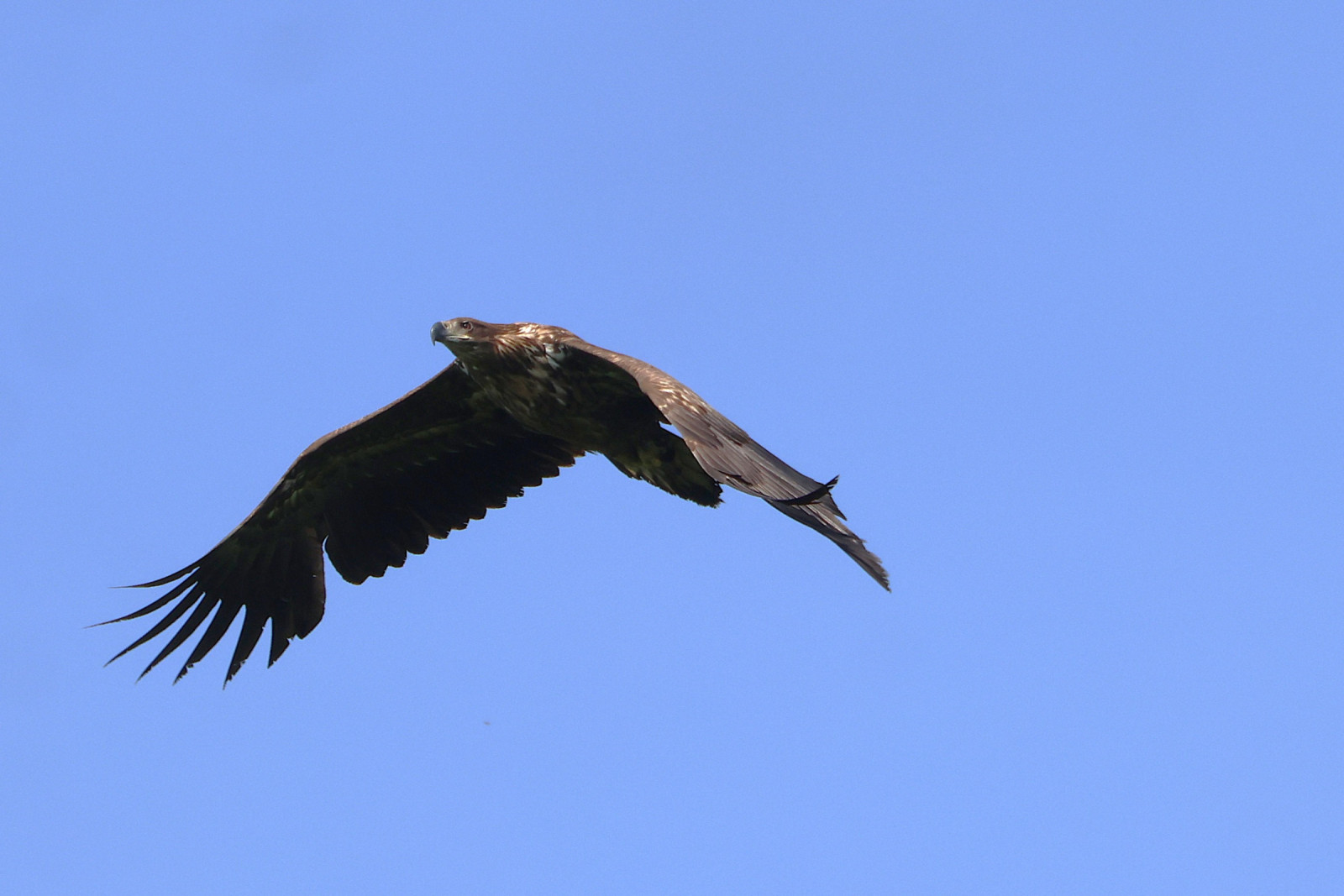
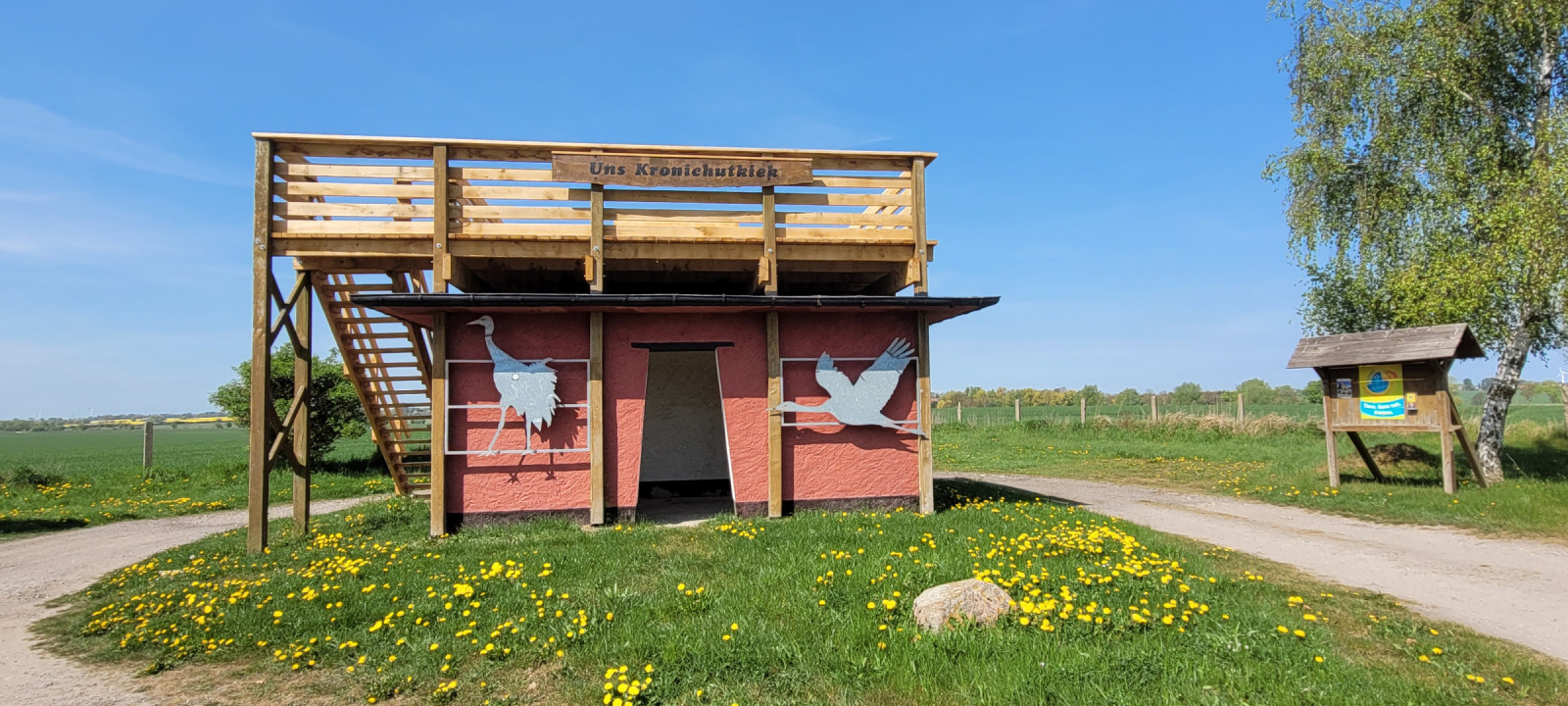
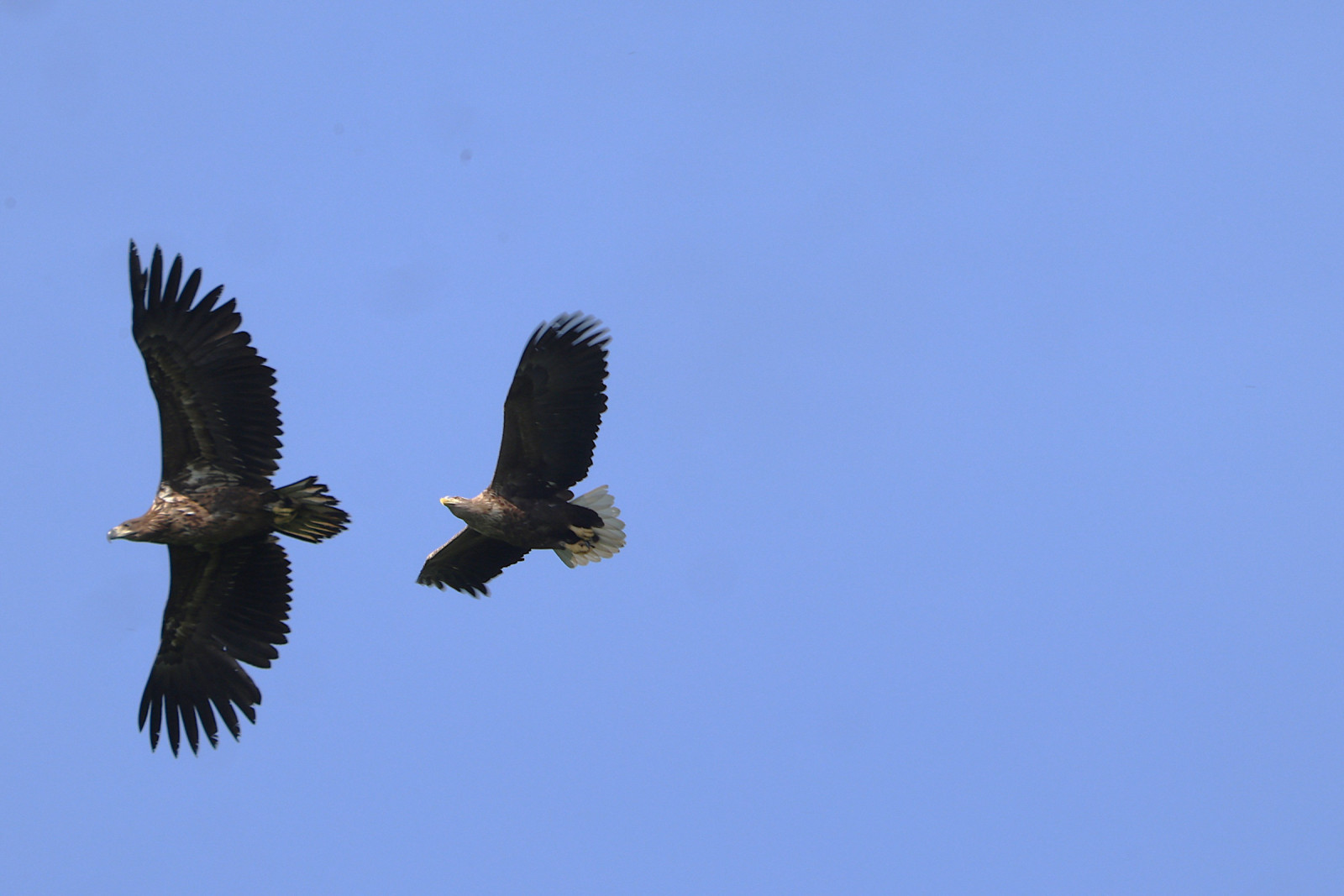
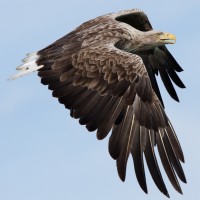
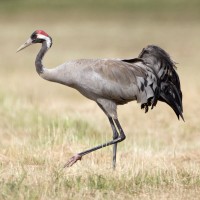
Observation hide overlooking fields that are a hotspot for Grue cendrée and Pygargue à queue blanche.
The Kranichutkiek (Kranichausguck or 'crane outlook') is a hide and observation platform on the side of a county road in northern Germany, just inland from the Barther lagoon, and Baltic Sea. This part of Mecklenburg Vorpommern is a bird-rich region in general, and two of the most well known species gather in the surrounding fields at this spot: Grue cendrée and Pygargue à queue blanche.
The Grue cendrée gather in huge numbers, during migratory times and summer, to feed and rest on the agricultural land, and the Pygargue à queue blanche sit in trees in the middle of the fields, where from they feed on spawning fish in the nearby stream (star on the map), and also teach their young to fly and hunt. On some occasions, more than 50 Pygargue à queue blanche have been spotted in one day!
There are also helpful information boards to read at the hide.
The Kranichutkiek is located just north of the village of Flemendorf. One can park directly at the observation hide, on the side of the road. Press P on the map for directions.
With public transport, one can cycle (15min) or even walk (1hr/4.5km) from Kenz station (marked 1 on the map) on the RB25 train line to the observation hide, via quiet and picturesque country roads.
 ) Insérez les noms d'oiseau dans votre langue. Ils seront automatiquement traduits pour les autres usagers !
Votre feedback sera transmis à l’auteur.rice de cette zone et à l’équipe éditoriale de Birdingplaces, qui l’utiliseront pour améliorer la qualité des informations. (Vous souhaitez publier un commentaire visible en bas de page ? Fermez cette fenêtre et choisissez l’Option 1 : « Publier un commentaire, un conseil ou une observation ».)
Veuillez fournir des suggestions d'améliorations ou d'ajouts au texte de ce site ornithologique.
Veuillez fournir vos suggestions d'améliorations ou d'ajouts à la carte.
Veuillez fournir des suggestions d'améliorations ou d'ajouts à la liste des oiseaux.
Cliquez sur l'icône de l'oiseau () Insérez les noms d'oiseau dans votre langue. Ils seront automatiquement traduits pour les autres usagers !