

Charger images
Les formats d'image autorisés sont de type jpeg, png ou gif
La taille maximale du fichier doit être de 20MB
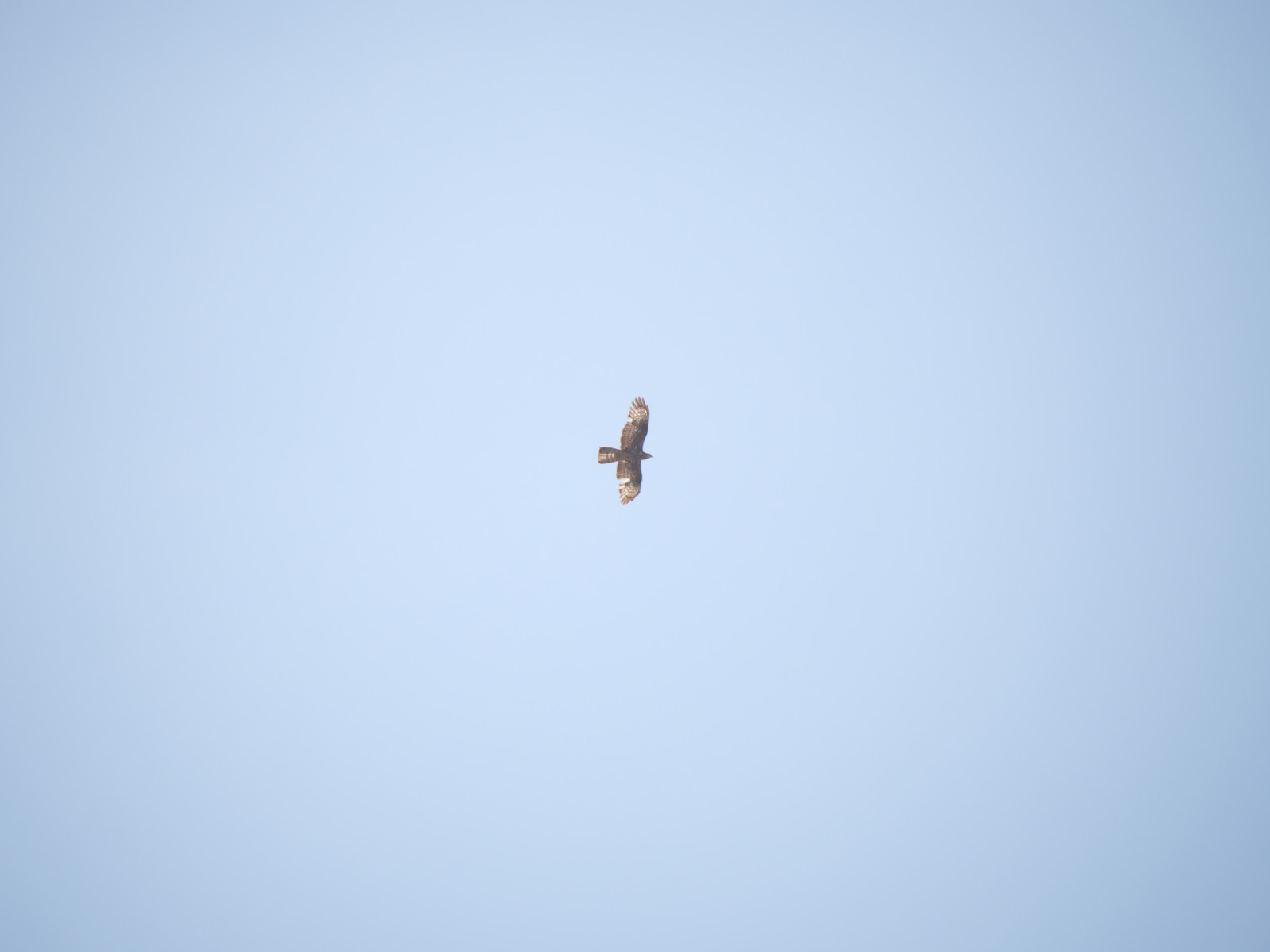
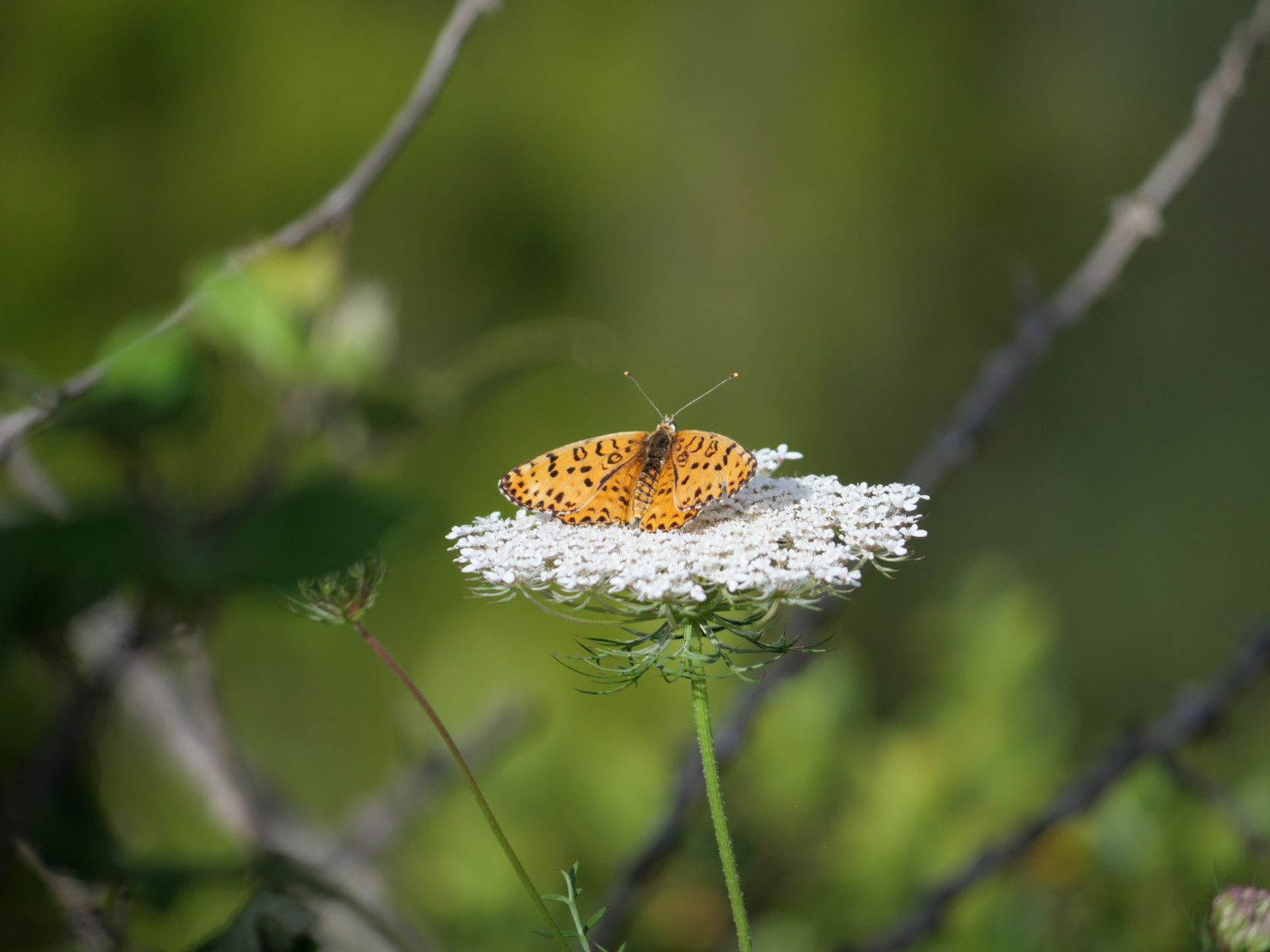
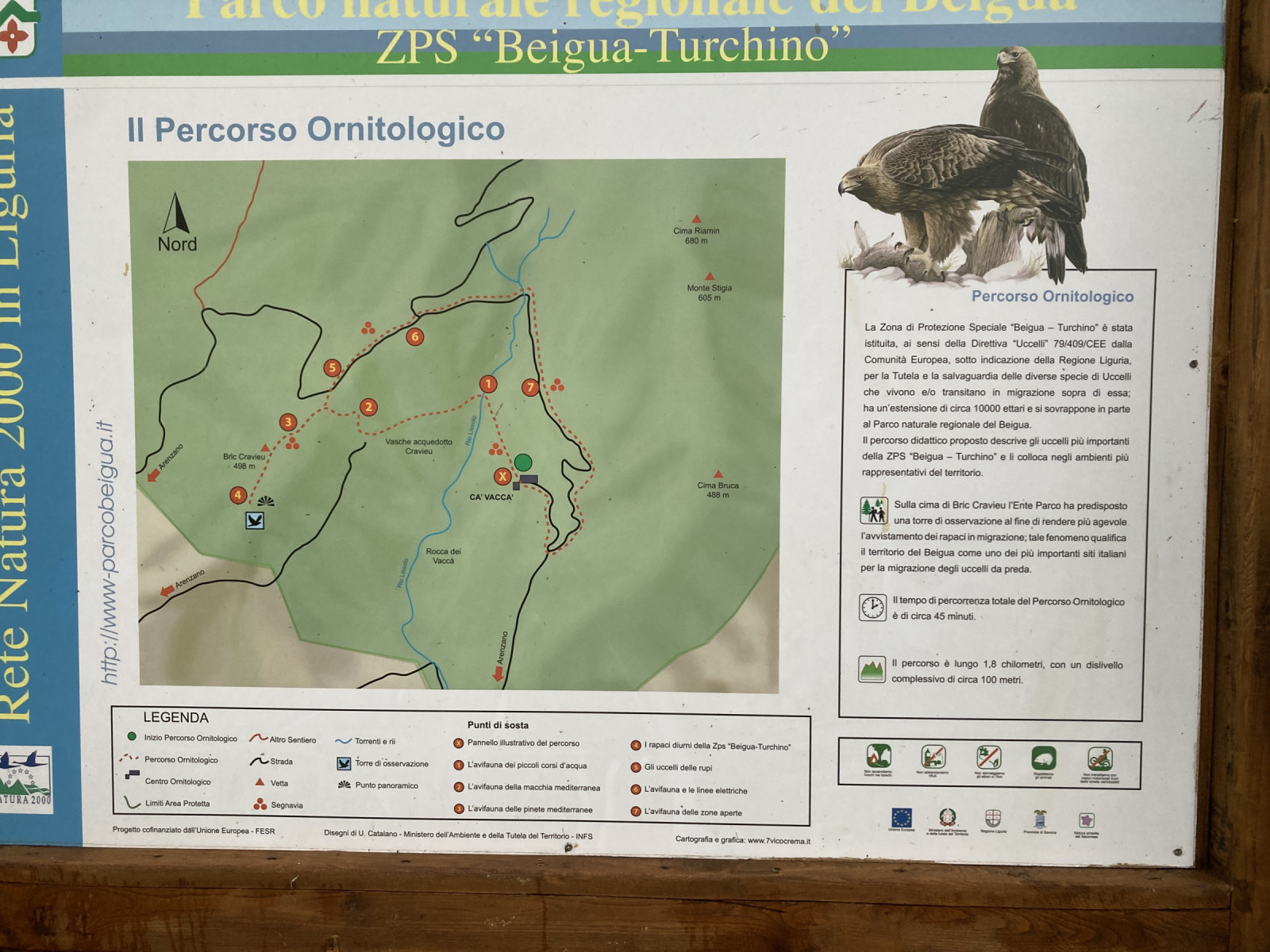
The Beigua Natural Park is known as one of the hotspots for raptor migration in Italy, especially for the Circaète Jean-le-Blanc.
Cima Ramà is located at northernmost edge of the Western Mediterranean Sea, and with mountains higher than 1000 m a.s.l. creating a bottleneck for migrating raptors. In spring, the most abundant species are Circaète Jean-le-Blanc in March and Bondrée apivore in May. The site is probably the best spot in Italy for watching migrating Circaète Jean-le-Blanc. Individuals breeding in Italy cross the Mediterranean Sea through the Straits of Gibraltar, making a circuitous route so that the largest concentration of migrating Circaète Jean-le-Blanc in Italy occurs over the Ligurian Apennines, in this site (near Arenzano), both in autumn and in spring.
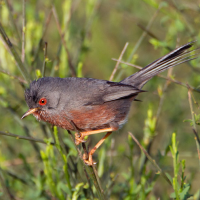
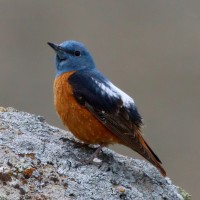
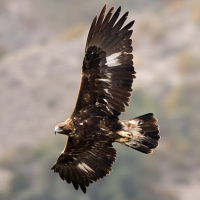
In mid-March, more than 500 individuals per day can be seen. The most favourable weather conditions are cloudy with southwestern winds, but with no rain. Vautour fauve are also commonly seen in the area. In the first half of april, the migration of Busard des roseaux peaks, and also many Martinet à ventre blanc can be seen. Aigle royal is a breeding species in the area. Cima Ramà is a good spot for falcons, especially Faucon hobereau and Faucon crécerelle. Curlo is the easiest and better spot for watching raptor migration here, but also from the ridge toward the Riparo Scarpeggin or from the birdwatching tower you can do great observations. The best site also varies depending on the weather. in the rocky areas, Monticole bleu is breeding and the Tichodrome échelette is wintering regularly. Also, in the Erica arborea dominated shrublands, the Fauvette pitchou is very common. Here, the Perdrix rouge is also present.
_________________________
Italiano: Cima Ramà si trova all'estremità settentrionale del Mar Mediterraneo occidentale, con montagne che superano i 1000 m s.l.m., creando un collo di bottiglia per i rapaci migratori. In primavera, le specie più abbondanti sono il Circaète Jean-le-Blanc a marzo e il Bondrée apivore a maggio. Il sito è probabilmente il punto migliore in Italia per osservare il Biancone in migrazione. Gli individui nidificanti in Italia attraversano il Mar Mediterraneo attraverso lo Stretto di Gibilterra, compiendo un percorso tortuoso, tanto che la maggiore concentrazione di Biancone in migrazione in Italia si verifica sull'Appennino Ligure, in questo sito (vicino ad Arenzano), sia in autunno che in primavera.
A metà marzo si possono osservare più di 500 individui al giorno. Le condizioni meteorologiche più favorevoli sono cielo nuvoloso con venti da sud-ovest, ma senza pioggia. Anche il Vautour fauve è comunemente avvistato nella zona. Nella prima metà di aprile si osserva la migrazione del Busard des roseaux sulle cime, e anche molti Martinet à ventre blanc. L'Aigle royal è una specie nidificante nella zona. Cima Ramà è un buon punto per i falchi, in particolare il Faucon hobereau e il Faucon crécerelle. Curlo è il punto più facile e migliore per osservare la migrazione dei rapaci qui, ma anche dal crinale verso il Riparo Scarpeggin o dalla torretta di osservazione si possono fare ottime osservazioni. Il sito migliore varia anche a seconda del meteo. Nelle zone rocciose, il Monticole bleu è nidificante e il Tichodrome échelette sverna regolarmente. Inoltre, nelle macchie a dominanza di Erica arborea, è molto comune la Fauvette pitchou, dove è presente anche la Perdrix rouge.
The site can be reached by car, from Arenzano following a small road leading to Agueta and Curlo. Click on the P in the map for directions. The walking route indicated on the map is about 6 km.
_________________________
Italiano: Il sito è raggiungibile in auto, da Arenzano seguendo una stradina che porta ad Agueta e Curlo. Cliccare sulla P nella mappa per le indicazioni stradali. Il percorso a piedi indicato sulla mappa è di circa 6 km.
 ) Insérez les noms d'oiseau dans votre langue. Ils seront automatiquement traduits pour les autres usagers !
Votre feedback sera transmis à l’auteur.rice de cette zone et à l’équipe éditoriale de Birdingplaces, qui l’utiliseront pour améliorer la qualité des informations. (Vous souhaitez publier un commentaire visible en bas de page ? Fermez cette fenêtre et choisissez l’Option 1 : « Publier un commentaire, un conseil ou une observation ».)
Veuillez fournir des suggestions d'améliorations ou d'ajouts au texte de ce site ornithologique.
Veuillez fournir vos suggestions d'améliorations ou d'ajouts à la carte.
Veuillez fournir des suggestions d'améliorations ou d'ajouts à la liste des oiseaux.
Cliquez sur l'icône de l'oiseau () Insérez les noms d'oiseau dans votre langue. Ils seront automatiquement traduits pour les autres usagers !