Charger images
Les formats d'image autorisés sont de type jpeg, png ou gif
La taille maximale du fichier doit être de 20MB


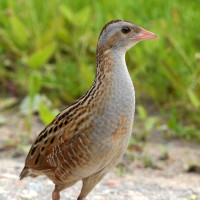
Local Nature Reserve and shallow loch that is jointly managed by the RSPB and Urras Oighreachd Ghabhsainn. In summer the Râle des genêts can be heard calling.
Loch Stiapabhat is a large, nutrient-rich and shallow loch. The loch has an estimated maximum depth of 5m, and is 7m above average sea level, covering an area of around 2.5 hectares. It is rich in nutrients due to the underlying calcareous sand and surface drainage from the surrounding crofts. It has been designated as a Site of Special Scientific Interest (SSSI) and in 2005, it was declared a Local Nature Reserve - the only one in the Western Isles. You can view the area from a bird hide.
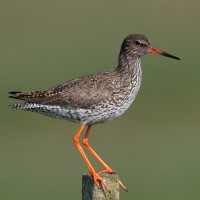
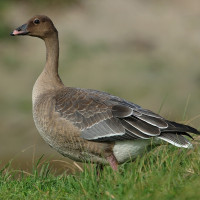
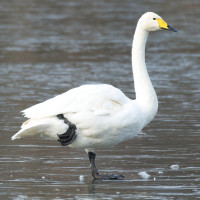
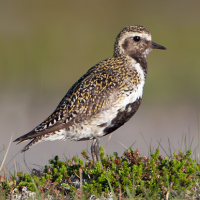
Loch Stiapabhat is an important feeding stop during spring and autumn for a range of rare and interesting species as it lies on the main flyway from and to the Arctic. These include the Cygne chanteur and Oie à bec court. It also supports many feeding and nesting birds including those of international importance such as the Bécasseau variable, Chevalier gambette, Pluvier doré and Vanneau huppé.
In the summer, the Râle des genêts can be heard calling from the tall vegetation around the Loch which lies within the Ness and Barvas Special Protection Area, created to protect the Râle des genêts. The machair becomes a carpet of colour with birds-foot trefoil, eyebright, clovers and orchids among some of the many wildflowers that can be seen.
Loch Stiapabhat is located in Ness, in the north west of the Isle of Lewis. Leave Stornoway heading towards Barvas, continue through Barvas north, following signs to the Butt of Lewis along the A857 (25.7 miles). Turn left onto Slighe Naomh Rònain/B8013, arrive at the parking bay for Loch Stiapabhat.
The observatory is located opposite the turning into Lionel School and Spòrsnis in Lionel, North Lewis. The observatory is open all year round (never locked). Parking is available at the junction opposite to the gated entrance to the reserve. Press P on the map for directions.
 ) Insérez les noms d'oiseau dans votre langue. Ils seront automatiquement traduits pour les autres usagers !
Votre feedback sera transmis à l’auteur.rice de cette zone et à l’équipe éditoriale de Birdingplaces, qui l’utiliseront pour améliorer la qualité des informations. (Vous souhaitez publier un commentaire visible en bas de page ? Fermez cette fenêtre et choisissez l’Option 1 : « Publier un commentaire, un conseil ou une observation ».)
Veuillez fournir des suggestions d'améliorations ou d'ajouts au texte de ce site ornithologique.
Veuillez fournir vos suggestions d'améliorations ou d'ajouts à la carte.
Veuillez fournir des suggestions d'améliorations ou d'ajouts à la liste des oiseaux.
Cliquez sur l'icône de l'oiseau () Insérez les noms d'oiseau dans votre langue. Ils seront automatiquement traduits pour les autres usagers !