Charger images
Les formats d'image autorisés sont de type jpeg, png ou gif
La taille maximale du fichier doit être de 20MB

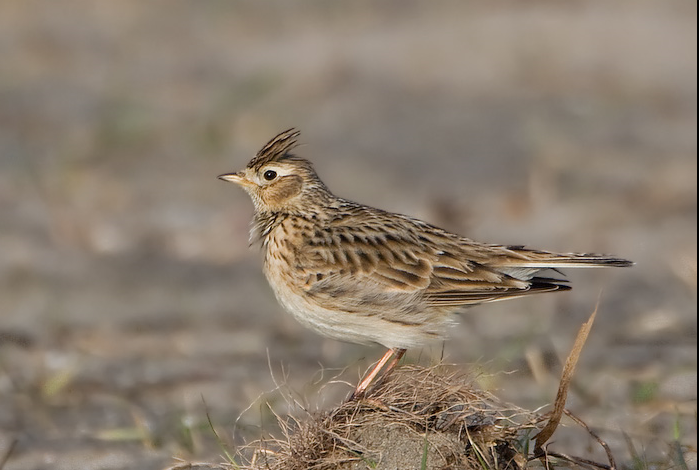
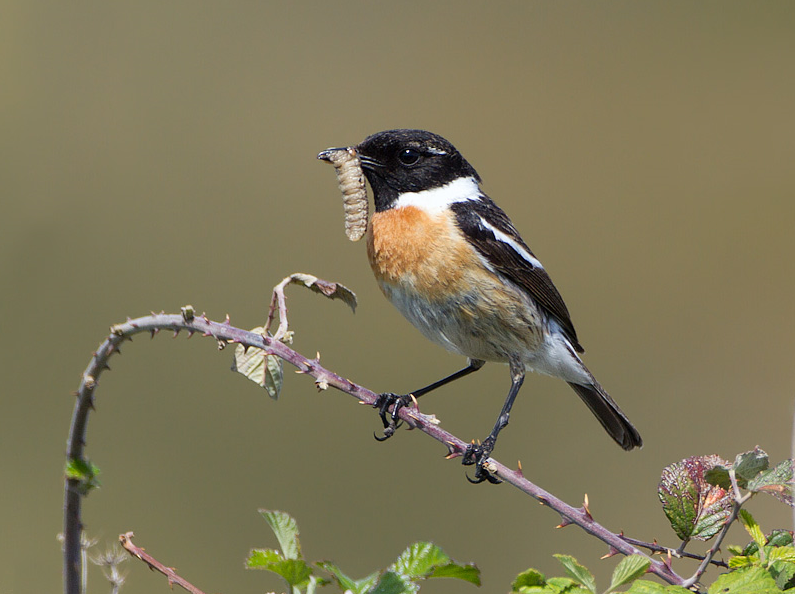
Pitstone Hill is part of the Chiltern Hills, preserved by the National Trust. As well as resident birds, passage migrants can be found during the seasons.
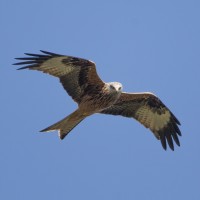
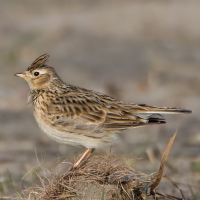
This site can be visited as part of a longer journey along the Ridgeway long-distance path or as a shorter local visit. The views from the top of the scarp are nice, but most birding should be done along the eastern boundary or in the scrub and woods on the steeper scarp slope. Scan the scrub for various passerines and look up for circling Buse variable, Milan royal and Alouette des champs.
The simplest access is to walk along the Ridgeway, but that probably means that the visitor won't be able to explore the site, needing to find transport or accommodation. Infrequent buses call at the villages of Ivinghoe and Aldbury, both nearly 2 kilometres away. For birders, it's more sensible to drive or cycle to the car park on Stocks Road.
On site, access is best by foot, bikes would restrict movement, along tracks or across grassy slopes. Not recommended for wheelchairs.
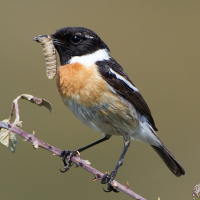
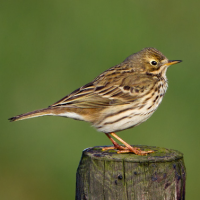
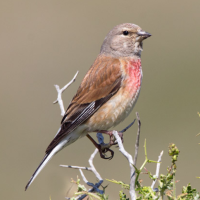
Best birding is in early morning, when passerines are most active and dog-walkers are not. However, as the air warms during the day, raptors such as Buse variable and Milan royal use thermal updraughts to cruise the scarp slope. Alouette des champs nest in the grassy slopes and the scubby boundary with the arable fields houses passerines such as Bruant proyer, Tarier pâtre and Bruant jaune. The extensive scrub on the scarp slope is home to Linotte mélodieuse, Fauvette grisette and Chardonneret élégant.
In the right season, there are good shows of butterflies. The site is adjacent to Aldbury Nowers HMWT nature reserve, notable for its range of butterflies.
It's worth scanning the flooded Pitstone quarry (no public access) for water birds; several notable birds have been seen here. Also scan fields and woodlands below the scarp.
 ) Insérez les noms d'oiseau dans votre langue. Ils seront automatiquement traduits pour les autres usagers !
Votre feedback sera transmis à l’auteur.rice de cette zone et à l’équipe éditoriale de Birdingplaces, qui l’utiliseront pour améliorer la qualité des informations. (Vous souhaitez publier un commentaire visible en bas de page ? Fermez cette fenêtre et choisissez l’Option 1 : « Publier un commentaire, un conseil ou une observation ».)
Veuillez fournir des suggestions d'améliorations ou d'ajouts au texte de ce site ornithologique.
Veuillez fournir vos suggestions d'améliorations ou d'ajouts à la carte.
Veuillez fournir des suggestions d'améliorations ou d'ajouts à la liste des oiseaux.
Cliquez sur l'icône de l'oiseau () Insérez les noms d'oiseau dans votre langue. Ils seront automatiquement traduits pour les autres usagers !