Charger images
Les formats d'image autorisés sont de type jpeg, png ou gif
La taille maximale du fichier doit être de 20MB
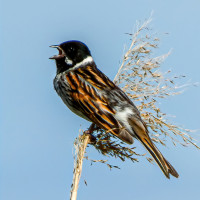
, Spike Island, Widnes. Bill Morton (29).JPG)

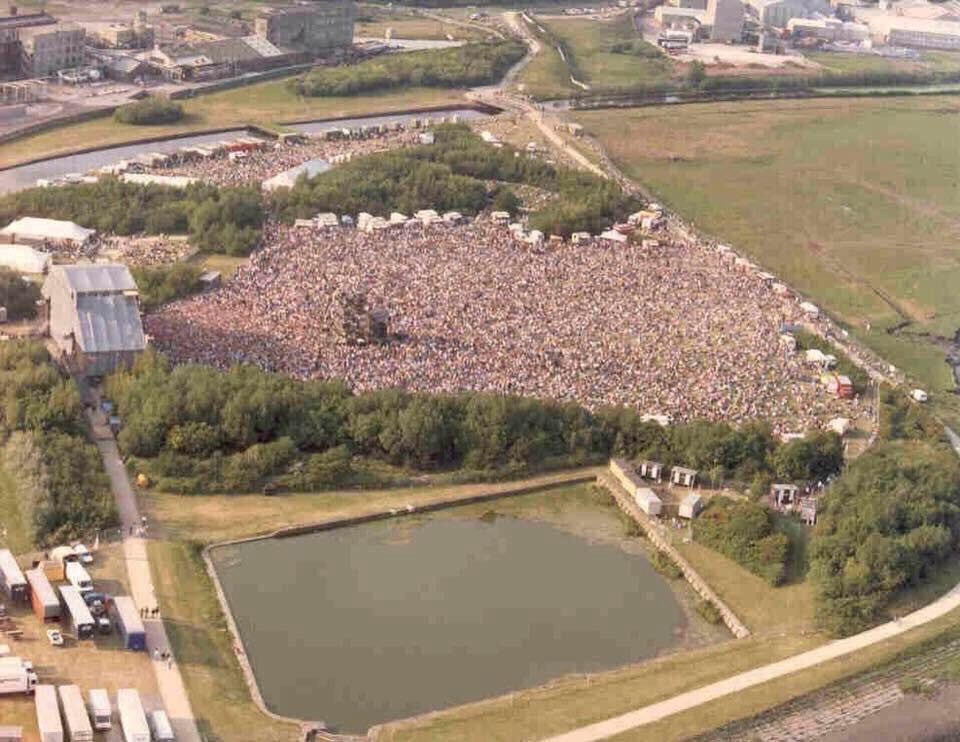
Spike Island is more famous for its 27th May 1990 Stone Roses music concert and its heritage at the forefront of the industrial revolution.
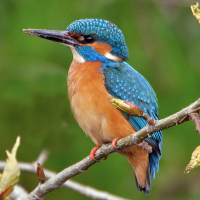
Spike Island and the Trans Pennine Trail to Fiddlers Ferry. Today Spike Island is perfectly positioned south of Widnes town centre, sandwiched between the Sankey Canal and the River Mersey for a variety of birds in a variety of habitats. A former industrial (Catalyst industry Museum nearby) site which today is set in an informal park with excellent facilities for park users. The wildlife and birds live side by side with the public who use the site for recreational purposes, ie walking, cycling, fishing, sailing and watching the world go by. Most people go about their business unaware that birds like the Martin-pêcheur d'Europe is fishing for a meal from the lock gates as they walk past on their way around the park. Bernache du Canada, ducks, Gallinule poule-d'eau, Foulque macroule and Fuligule morillon freely feed within feet of people and it's possible to overlook a Mouette mélanocéphale joining the many Mouette rieuse coming to steal bread from the Cygne tuberculé. One particular Mouette rieuse commutes to the island every autumn/winter since 2015 from its nesting grounds in Oslo, Norway.
The island is on a former chemical site and is separated from the 'mainland' by the Sankey Canal and the River Mersey. Access to the island is via a crossing a small bridge at the lock gates south of the two main car parks. On the island is a series of mature poplars and an assorment of sycamore, holly, willow, pine and holly with buckthorn, bramble and cotoneater with large areas of grass parkland. A square area open water known as the 'wet dock' can produce ducks, Eurasian Coot, swans, Grey Wagtail, Reed and Sedge Warbler and Common Kingfisher. The River Mersey flows west to east and back again along the edge of Widnes Warth Marsh, a salt marsh that floods on 10 metre tides. It's worth paying attention on the biggest tides (10 metres) for the numbers of gulls, herons and birds of prey that feed on the fleeing voles/rodents that live on the marsh and are forced by the flood to seek drier ground and are then exposed for predation by the rising waters. Care should be taken and it is advisable not to walk over the salt marsh at any time of the day, or year.
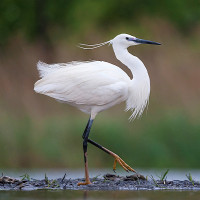
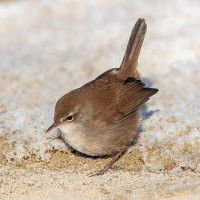
An extension to the site is the popular Trans Pennine Trail that cuts through the park and crosses under the new Mersey Gateway bridge. Follow signs at the east end of Spike Island and walk/cycle the 2 miles to Fiddlers Ferry and beyond. The trail borders the Sankey Canal which has a rich variety of wildlife. Listen out for the explosive song of Britains loudest passerine the Bouscarle de Cetti along its route. Bergeronnette printanière and Traquet motteux can be found on the marsh in spring and autumn. Hirundines hawk over the canal and can included Hirondelle de fenêtre, Hirondelle rustique and Hirondelle de rivage. The occasional Locustelle tachetée, Fauvette babillarde and Bruant jaune are infrequent visitors. The salt marsh can produce Hibou des marais, Busard des roseaux and Busard Saint-Martin, Grande Aigrette and Aigrette garzette, Oie cendrée, and rarely seabirds after north west autumn gales. The sand banks should be checked for gulls with Goéland à ailes blanches possible and big flocks of Vanneau huppé occur in late summer with the possibility of Bécasseau sanderling, Tournepierre à collier, Pluvier doré and small flocks of Bécasseau variable and Grand Gravelot. Rare passerines can turn up at times with Roitelet triple-bandeau and Pouillot à grands sourcils seen.
The whole area is within the Mersey Valley which acts like an avian migration corridor, so the chance of migrants flying through or stopping off to rest is much underrated. The whole site should reward those with frequent visits and definitely worthy of a visit if you are in the area. A Faucon pèlerin can sometimes be seen on the stantions of the new bridge and/or on the heraldic shields on the side of the Silver Jublee bridge, or sat on top of the arching steel works. Star sightings here have included: Grèbe esclavon, Grand Labbe, Labbe pomarin, Mouette pygmée, Mouette tridactyle, Goéland à ailes blanches, Goéland bourgmestre, Grande Aigrette, Sterne pierregarin, Guifette noire, Sterne arctique, Mésange nonnette and Balbuzard pêcheur. Cetaceans are rare but possible and the species most likely to be seen is the Harbour Porpoise. Grey Seal do occur sporadically, and once a very rare Hooded Seal swam ashore. It was rescued by the RSPCA and eventually repatriated to its home waters in Greenland.
A short walk away south along the Trans Pennine Trail is West Bank promenade which gives excellent views across the narrowest part of the River Mersey and adjacent to Runcorn Jubelee bridge. At the narrow neck beneath the bridge is a small park with benches, formal gardens and a public house. Several migrating birds cross at this point with Marsh Tit and Firecrest beening seen here. Although quite noisy from traffic overhead the trees bordering Mersey Road and the church grounds should produce good visible migrants at the right time and with the right winds.
Access to Spike Island can be reached from junction 7 on the M62 or junction 12 on the M56 following (signs for the Catalyst Museum) A557 then onto Waterloo Road taking the turning for Mersey Road. The Catalyst Museum and the car park is situated at a left hand turn. Follow the road and park alongside the canal.
Regular bus services operate from Widnes town centre to West Bank on Mersey Road where there is a short walk to the park. Bus numbers 110, 17, 27, 61, 79C and 82A. Bus stops near Spike Island, Widnes. Catalyst Museum, Mersey Road 6 min walk. Ashley Way, Widnes 14 min walk. Doctors Pub, Widnes 18 min walk. The Hive, Lugsdale 25 min walk.
Widnes Railway Station on Victoria Ave and connectiong bus services nearby. Hough Green Railway Station on Liverpool Road is to the west and connecting bus services are available.
The area can be exposed in strong winds.
 ) Insérez les noms d'oiseau dans votre langue. Ils seront automatiquement traduits pour les autres usagers !
Votre feedback sera transmis à l’auteur.rice de cette zone et à l’équipe éditoriale de Birdingplaces, qui l’utiliseront pour améliorer la qualité des informations. (Vous souhaitez publier un commentaire visible en bas de page ? Fermez cette fenêtre et choisissez l’Option 1 : « Publier un commentaire, un conseil ou une observation ».)
Veuillez fournir des suggestions d'améliorations ou d'ajouts au texte de ce site ornithologique.
Veuillez fournir vos suggestions d'améliorations ou d'ajouts à la carte.
Veuillez fournir des suggestions d'améliorations ou d'ajouts à la liste des oiseaux.
Cliquez sur l'icône de l'oiseau () Insérez les noms d'oiseau dans votre langue. Ils seront automatiquement traduits pour les autres usagers !