Descrizione
Holy Island is a tidal island off Northumberland’s coast that becomes inaccessible when the tide covers its causeway. When it is safe to cross the causeway, it is a great destination for birders. Holy Island is part of the Lindisfarne National Nature Reserve, and considered to be one of the best birdwatching sites in Northumberland, with a large range of resident and visiting birds throughout the year. It is a regional hotspot for migrants in spring and autumn. Check tide tables before visiting (see the link below).
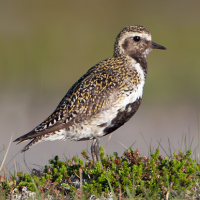
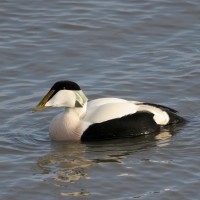
The island and the adjacent mudflats are the wintering range for almost the entire Svalbard population of Pale-bellied Oca colombaccio, and are also important for Oca zamperosee and Cigno selvatico, along with large numbers of ducks (notably Volpoca, Fischione, Alzavola, Codone) and waders (Pivieressa, Piovanello maggiore, Piovanello pancianera, Pittima minore, Pettegola, and many others). In late May, the north shore is a major staging post for large flocks of Corriere grosso and Piovanello tridattilo heading for the high arctic, while Piovanello comune and Gambecchio comune can often be found in late summer and autum. The large autumn flocks of Piviere dorato in the fields are also worth checking carefully for regular vagrant Piviere americano; Piviere orientale has also been recorded several times.
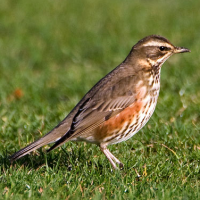
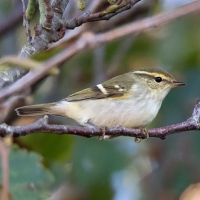
In October and November, look for large arrivals of thrushes, mostly Tordo sassello and Cesena, but also Tordo bottaccio and Merlo, and a few Merlo dal collare; the fields around the Straight Lonnen often have the largest numbers. At the same time, the hedges on the Straight Lonnen and the scattered bushes in the dunes often have many warblers and chats, with Capinera, Luì piccolo and Codirosso the most conspicuous, but also regularly other species like Luì forestiero, Luì di Pallas, Bigia padovana, Pigliamosche pettirosso, Balia nera, and Pettazzurro.
Recent rarities have included Oca granaiola della taiga, Oca granaiola della tundra, Svasso cornuto, Gabbiano di Sabine, Strolaga beccogiallo, Falco cuculo, Averla bruna, Averla cenerina,Luì boreale, Luì verdastro, Luì scuro, Locustella di Pallas, Sterpazzola nana, Storno roseo, Tordo dorato, Codazzurro, Culbianco isabellino, Zigolo minore.
Dettagli
Accesso
Signposted east off the A1 at Beal; head east for 8 km on minor raod, across tidal causeway. Parking on left just before entering village. Limited parking off road in western part of the island. Nearest train station is Berwick, 12 km north. Possible to cycle but research before trying. On the map below you see a selection of walks around the island.
Terreno e habitat
Alberi e cespugli sparsi , Prateria/pascolo , Zona umida , Pianura , Brughiere/lande , Mare , Lago , Spiaggia , Dune , Canneti , Velme , Terreni coltivatiCaratteristiche dell’area
Terreno piano , Paesaggio aperto , Acqua alta possibile , SabbiosoPercorso ad anello
SiÈ utile un cannocchiale?
Può essere utileBuona stagione per il BW
Tutto l'annoMiglior periodo per visitare
Migrazione primaverile , Migrazione autunnale , Inverno , Primavera , Autunno , EstatePercorso
Strada asfaltata , Sentiero ampio , Strada sterrata , Sentiero strettoGrado di difficoltà del percorso a piedi
Difficoltà mediaModalità di accesso
Bicicletta , A piediCapanno/torretta di osservazione
SiInformazioni aggiuntive
Holy Island is also known as Lindisfarne. Single bird hide overlooking The Lough (a small lake on the east side of the island). Viewpoint over small wetland (good for waders) on path from village to castle. Paths criss-cross the island and various circular walks can be made. Stay on marked paths as far as possible. Cattle graze the dunes. One site worth visiting is the Vicar's garden, in the SW corner of the village across the lane from the church (look over the wall from the adjacent pony field); vagrant warblers can be seen here after east winds in migration periods.
 ) per inserire i nomi delle specie nella tua lingua. I nomi delle specie verranno automaticamente tradotti per gli altri utenti!