Beschrijving
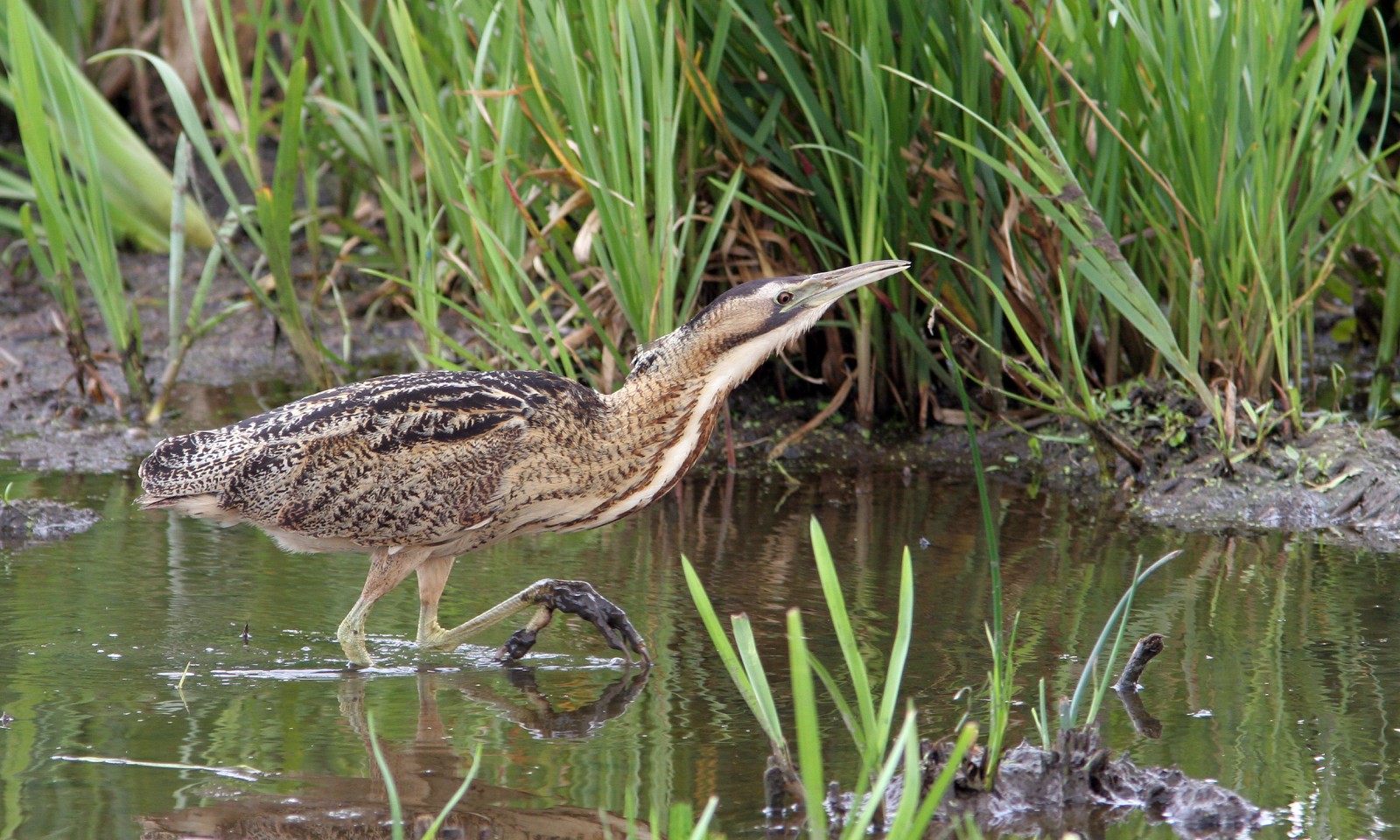
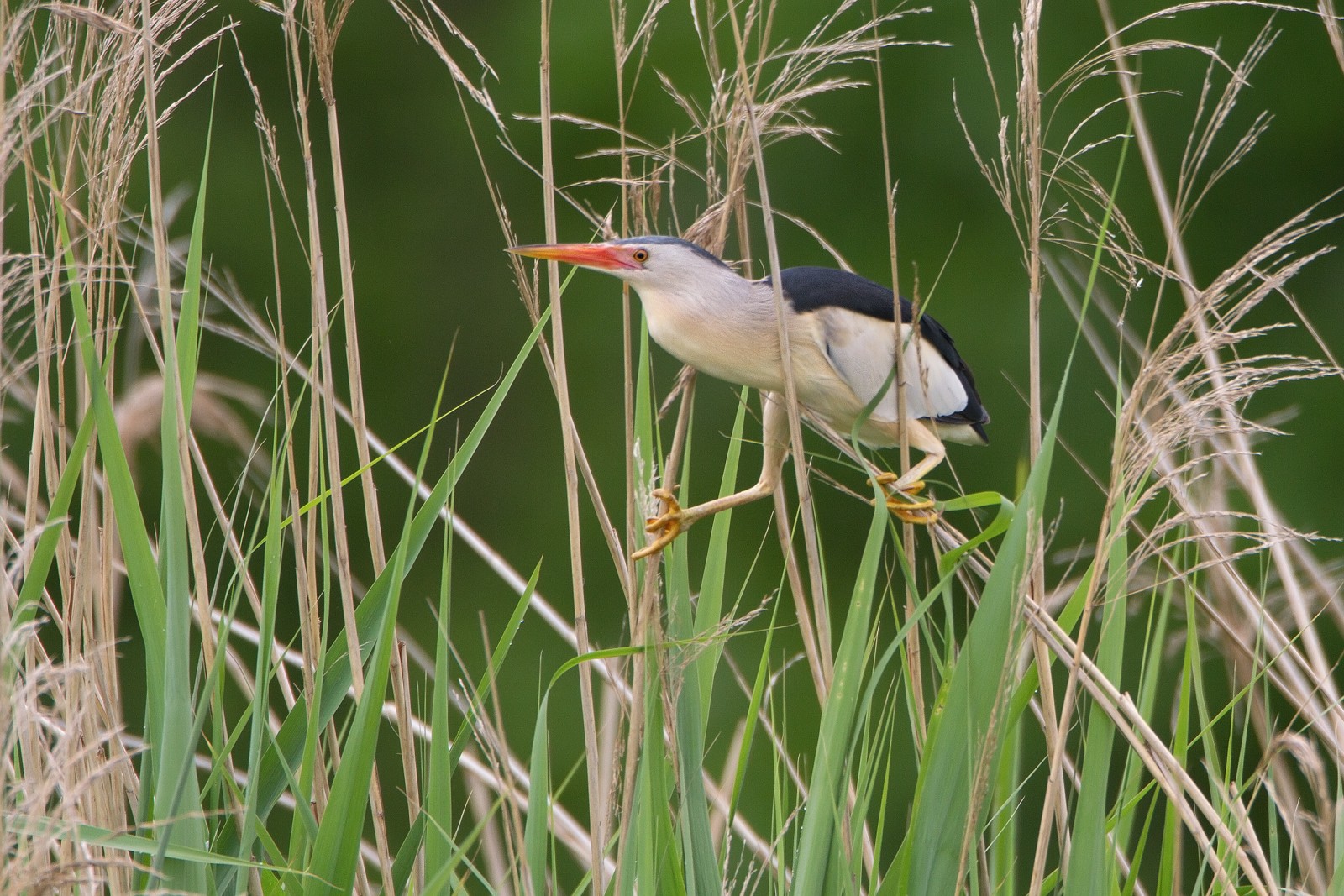
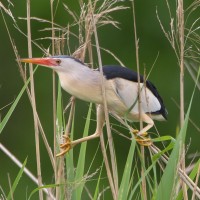
Rouelbeau can be conveniently visited after a trip to the nearby Marais de Sionnet (also described on Birdingplaces). Both sites are results of the Seymaz River renaturation projects carried out in the 2000s. Unlike the Marais de Sionnet, Rouelbeau lacks the floodplains suitable for waders. Among the 175 species recorded here, regular visitors and residents of the reedbeds include Roerdomp and Woudaap, along with other notable species.
Once a marsh, Rouelbeau is now a 410-meter-long but only a few dozen meters wide pond surrounded by reeds. It can be observed from one of its narrow ends. While the pond and reedbeds are interesting year-round, the surrounding fields are especially rich in surprises during migration periods.
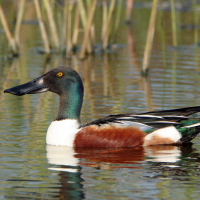
Focusing on the pond area, winter offers good chances of seeing Krooneend and Slobeend, with Smient and Pijlstaart becoming rarer in recent years. Zomertaling can be observed from spring to autumn, and Grote Zaagbek is present year-round. The pond also attracts some escapees, with records of Mandarijneend, Carolina-eend, Netta peposaca, and Anas bahamensis.
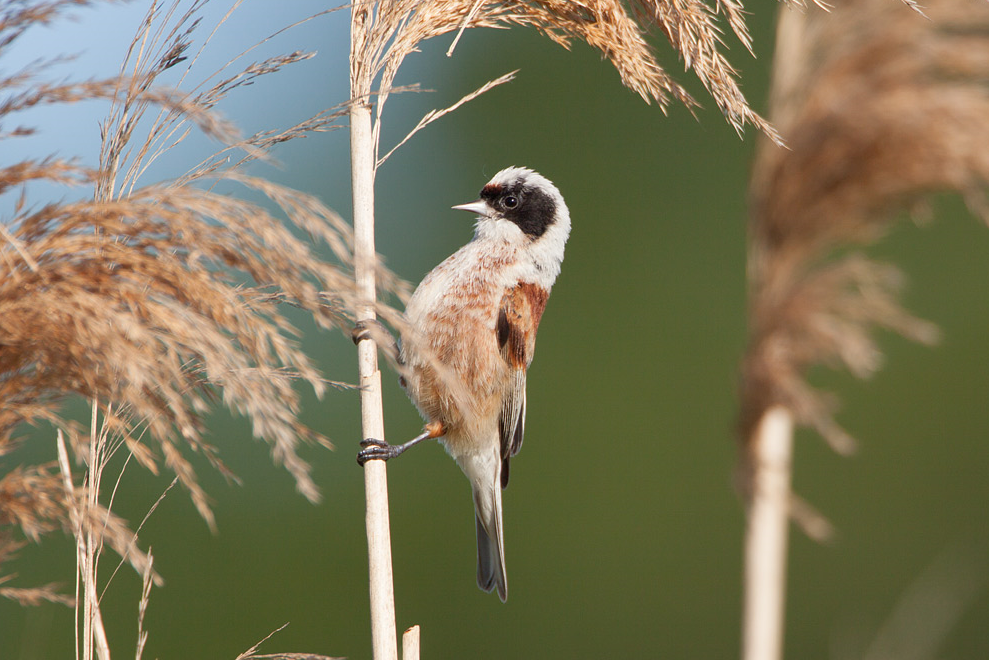
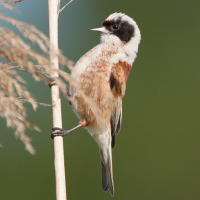
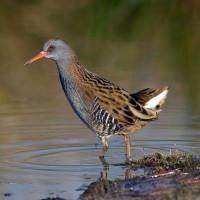
The reedbeds are dominated by Waterhoen, Kleine Karekiet, and Blauwe Reiger. Among them, other species like IJsvogel, Waterral, and Dodaars, which are present year-round, and Grote Karekiet, which breeds here, may be encountered. During migration, Buidelmees, Rietzanger, Kwak, and Purperreiger can be seen. Woudaap breeds here in spring and summer, while Roerdomp visits only in winter, accompanied by Bruine Kiekendief and Grote Zilverreiger.
In the marginal areas, waders such as Kleine Plevier and Zwarte Ruiter were more common in the past. Today, Witgat, Watersnip, and Kievit are occasional guests during migration, with the latter two sometimes staying into the winter months.
From April to May, the surrounding fields and hedges are worth exploring for Paapje, Holenduif, Fazant, Nachtegaal, Grauwe Klauwier, Orpheusspotvogel, and Graspieper. The likelihood of spotting a rarer pipit or breeding bird here may be greater than within Rouelbeau itself. The notable rarities recorded, including Ralreiger, Krombekstrandloper, and Steltkluut, date back to the early 2000s.
Details
Toegang
Rouelbeau can be reached on foot from the Marais de Sionnet (1) in about 15 minutes. During migration, it’s worth checking the surrounding fields and hedges on the way for pipits, buntings, and various warblers. If you want to start at Rouelbeau itself, the nearest bus stops are Carre d’Amont or Meinier, Pralys. For those arriving by car, parking is available at the nearby sports center (Press P on the map for directions). However, the best way to explore the area is by bike.
Unfortunately, the site itself can only be observed from one location (2), with most waterbirds usually gathering at the far end (3). Bringing a scope and a bit of patience is highly recommended!
Terrein en leefgebied
Verspreide bomen en struiken , Grasland/weide , Vlakte , Rietvelden , Landbouw , VijverOmstandigheden
VlakRondlopende wandeling mogelijk?
NeeTelescoop meenemen?
JaWanneer hier vogels kijken?
Het hele jaarToptijd voor dit gebied
Voorjaarstrek , Winter , NajaarstrekRoute
Breed padZwaarte wandeling
GemakkelijkToegankelijk via
Te voet , FietsVogelkijkhut aanwezig?
NeeLinks
- Excellent description by Alexandre Meisser (French)
- Bar-chart on E-Bird
- Description of the renaturation efforts by the community (French, pdf)
 ) om vogelnamen snel in te voeren via een aanklikbare lijst.