Opis
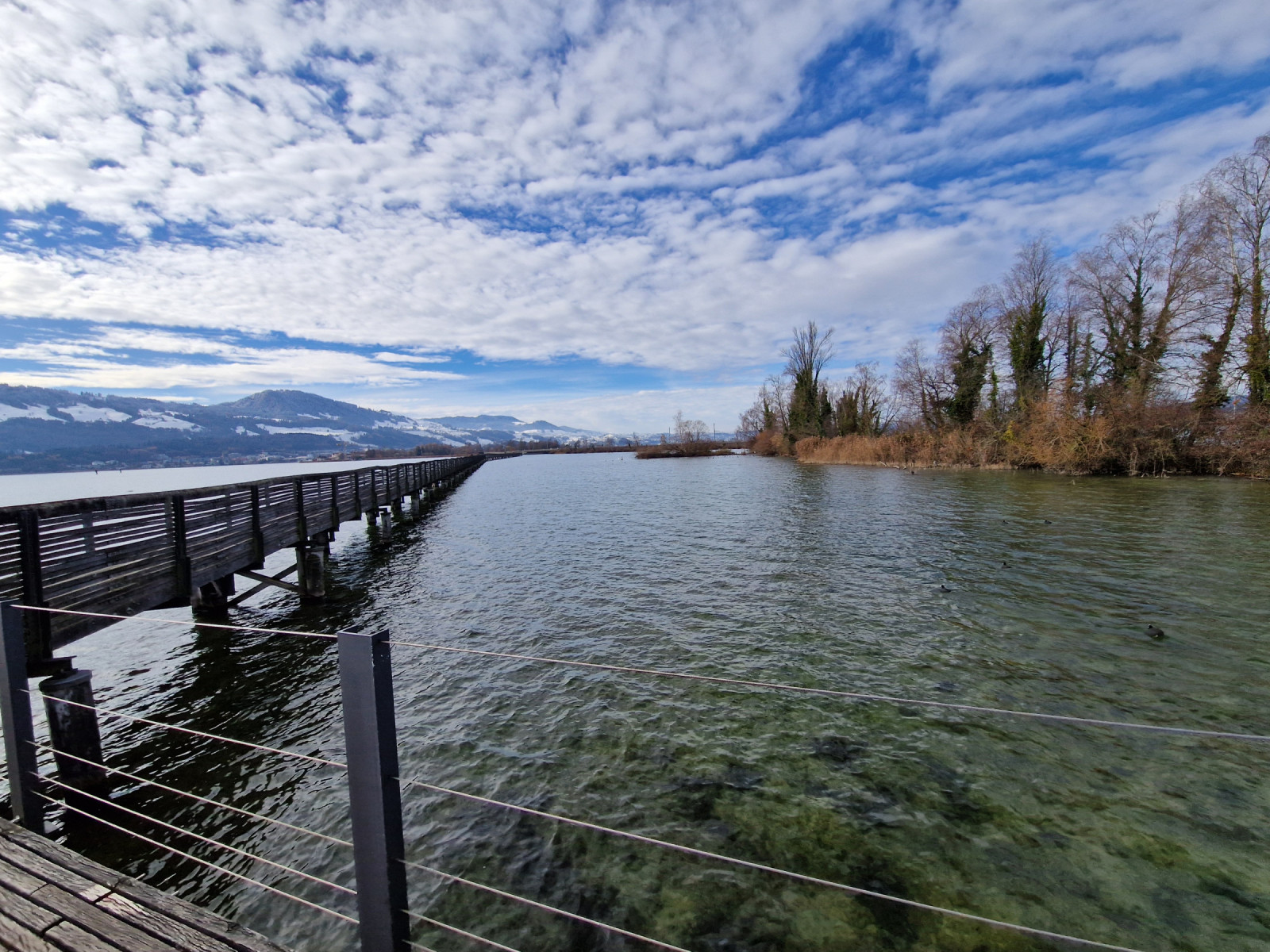
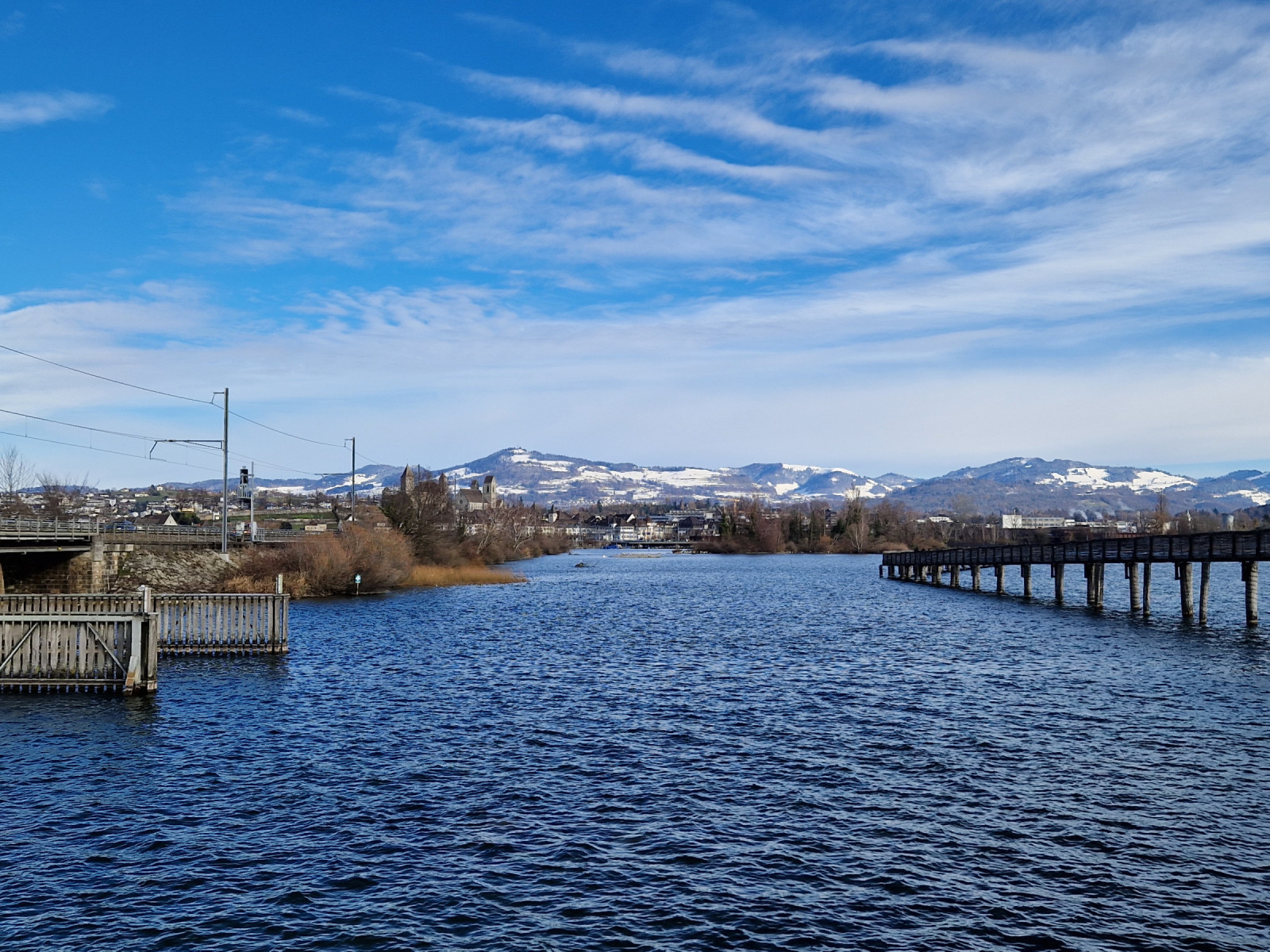
The village of Hurden on the left side of Lake Zurich and the town of Rapperswil on the right side are connected by a railway-and-road causeway and by a wooden footbridge. The latter runs in a semicircle. In the space between the footbridge and the causeway, a gravel island was created. This is intended to replace the habitat destroyed by the construction of the footbridge. A remarkable 250 species have been recorded in the area.
On the Hurden side of the footbridge, there is a point from which you can view the northern part of Lake Zurich in the wind shelter (1). Following the bridge further, you can see the gravel island (2) on one side, and on the other side the southern half of the lake and the bay of Rapperswil (3). At the end of the footbridge, you can see the harbour basin of Rapperswil (4). Unfortunately, the railing of the bridge is a bit too high for most spotting scopes.
The gravel island is an important habitat during both migration and breeding seasons - although only a minuscule replacement for the human-destroyed natural structures. In the early 2000s, when the island was built, rybitwa rzeczna bred here, but these were soon displaced by śmieszka and - much to the surprise of ornithologists - by mewa czarnogłowa, which is a rare breeding bird in Switzerland. In recent years, however, these species were again displaced by the mewa romańska, which now dominates the island during the breeding season.
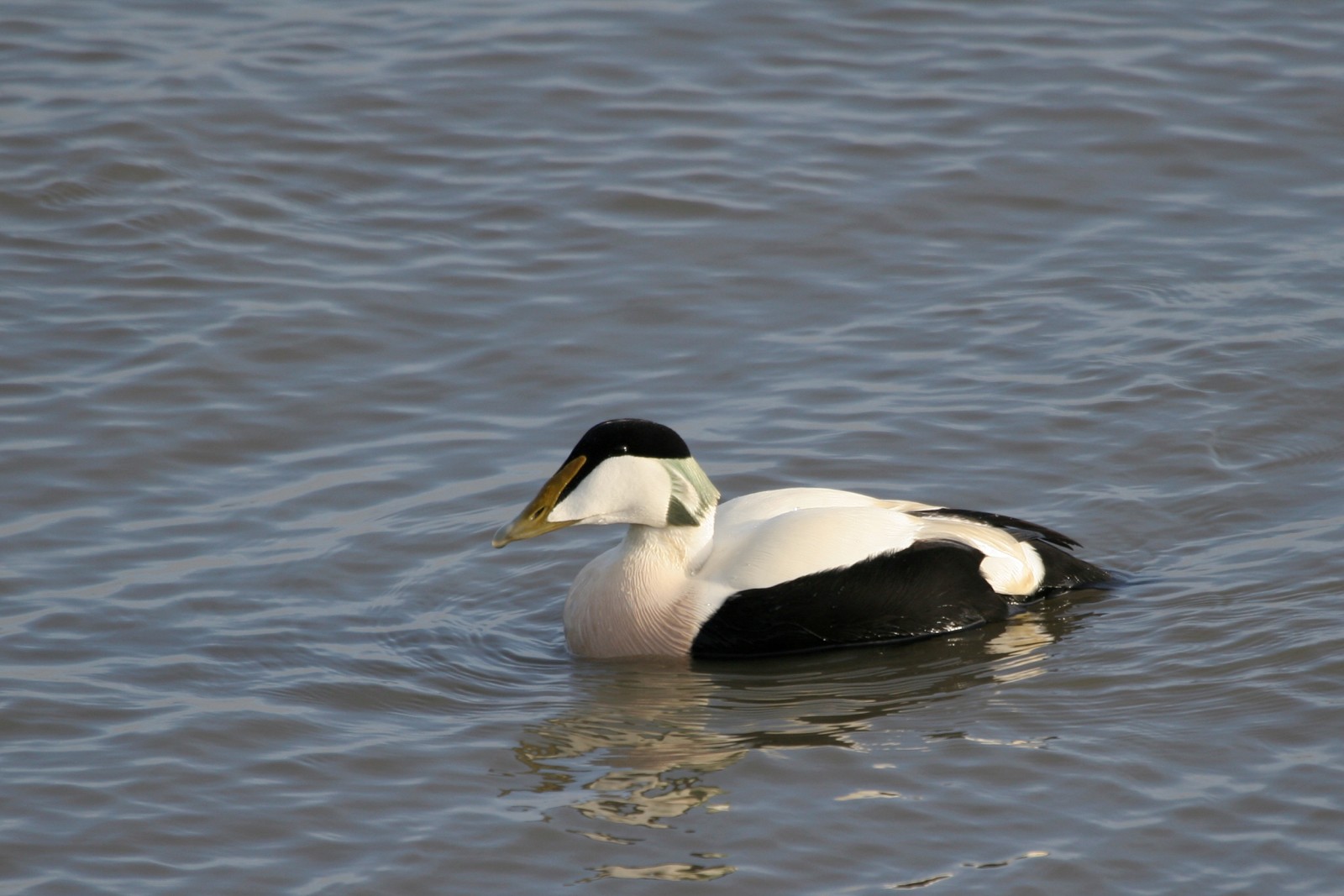
Another special breeding bird in the area is the edredon, which can be observed year-round. Other nearby-breeding birds include gęgawa, gągoł (which can be seen in large numbers in winter), perkozek, trzciniak, and wodnik (zwyczajny). Hoped-for breeding of the brodziec piskliwy did not occur, although the species is regularly observed. The kulik wielki , staying at Nuoler Ried, can also be observed year-round in flight in the area; the last breeding in Switzerland occurred on the opposite side of the lake (Frauenwinkel) in 2006.
As for migrants, the water here is too deep for waders. biegus zmienny, kszyk, batalion, krwawodziób, and kwokacz are observed, but only rarely. Migrants seen regularly include remiz, błotniak stawowy, and rybitwa czarna, as well as occasionally rarer terns (especially rybitwa białowąsa and rybitwa białoskrzydła are fairly common in spring and autumn). The mewa mała stays even longer and can be observed reliably here.
Regarding gulls, winter is the most interesting time. From November onward, mewa żółtonoga, mewa pospolita, the rare mewa srebrzysta, and occasionally the extremely rare-in-Switzerland mewa siodłata join the already-mentioned species. With luck, an attractive wader can then also be seen regularly on the island: the kamusznik is the latest-arriving member of this group. Among the many diving ducks, the ogorzałka may be found with some luck. The three diver species nur czarnoszyi, nur rdzawoszyi, and especially lodowiec - can sometimes be spotted on the lake through a scope. Other noteworthy winter “regulars” are szlachar, perkoz rdzawoszyi, and podgorzałka.
Finally, rarities found here include kormoran mały, płatkonóg płaskodzioby, wydrzyk wielki, wydrzyk ostrosterny, rybitwa krótkodzioba, mewa trójpalczasta, rybitwa czubata,and flaming różowy.
Szczegóły
Dostęp
The island is in an urban, well-connected area. It can be reached from Rapperswil station in 2 minutes by foot or from Hurden station in 5 minutes. Parking usually is scarce, public transport is recommended. A visit can easily be combined with a visit to Frauenwinkel. Lachner Aahorn and Nuoler Ried are close by, too (see the corresponding entries on this site).
Teren i siedlisko
Trzcinowiska , Jezioro , Miasto/wieśWarunki
PłaskiTrasa dookoła
NieCzy luneta będzie przydatna ?
TakUdany sezon obserwacyjny
Przez cały rokNajlepszy czas na wizytę
ZimaTrasa
Szeroka ścieżkaPoziom trudności szlaku pieszego
ŁatwyDostępne
Pieszo , Wózek inwalidzkiCzatownia/platforma obserwacyjna
NieDodatkowe informacje
Avoid windy conditions if possible. Heat haze above the water can be a serious challenge for scopes even on cold winter days.
A camera has also been installed on the island (see the links section).
 ) aby wstawić nazwy ptaków w swoim języku ojczystym. Nazwy ptaków zostaną automatycznie przetłumaczone dla innych użytkowników!