


Descrição
A small creek (The Tiebel) here feeds Lake Ossiach. It is a former moist agricultural area. Where in the past mostly corn has been grown. A 70 ha part area has been given back to nature in 2017 and the original wetland character has been restored. However, the actual aim of this project was not to restore the area to its natural state, but rather to reduce the nutrient levels in Lake Ossiach, as the Tiebel had become heavily enriched with nutrients due to the fertilisation of agricultural fields.
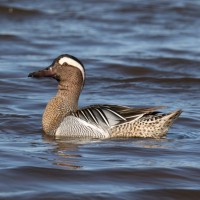
The ponds give the area its main character, and many species of waterbird can be seen here. Large flocks of swans, geese and ducks rest and forage here. Species like Marreco and Marrequinha-comum can be seen in small numbers near the edges of the ponds.
Ganso-comum can be found here in large numbers. Among them, there is also a Ganso-de-bico-curto, which is most likely an escapee from captivity.
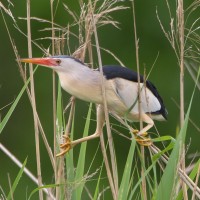
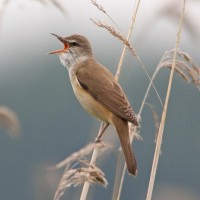
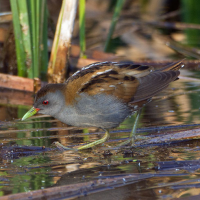
The reedbeds are great for many breeding birds, like Garça-pequena, Rouxinol-grande-dos-caniços and Frango-d'água. Waterplants cover large patches of water, and are great for Galinha-d'água, and sometimes even Franga-d'água-bastarda and Franga-d'água-grande.
In spring and summer, besides the two common heron species, Garça-real and Garça-branca-grande, you can also see rarer species such as Garça-roxa, Garça-branca-pequena, and Garca-vaqueira.
Of particular interest is the Corvo-marinho-de-faces-brancas colony that breeds here between the ponds, one of only three colonies of this species in Austria. Since the two basins were flooded, Socó-taquari have also bred here.
The agricultural side of the area on the east is great for large flocks of songbird after the breeding season. Large flocks of finches, sparrows and wagtails forage here in the fields.
Detalhes
Acesso
The area is best viewed on foot or by bicycle. Note: you cannot cycle everywhere. And not the whole area is walkable and has a lot of wet ground. On the sides are parking spaces for cars. The circular route around the wetland is about 5 km.
 ) para inserir nomes de aves no seu idioma. Os nomes das aves serão traduzidos automaticamente para outros utilizadores!