Description
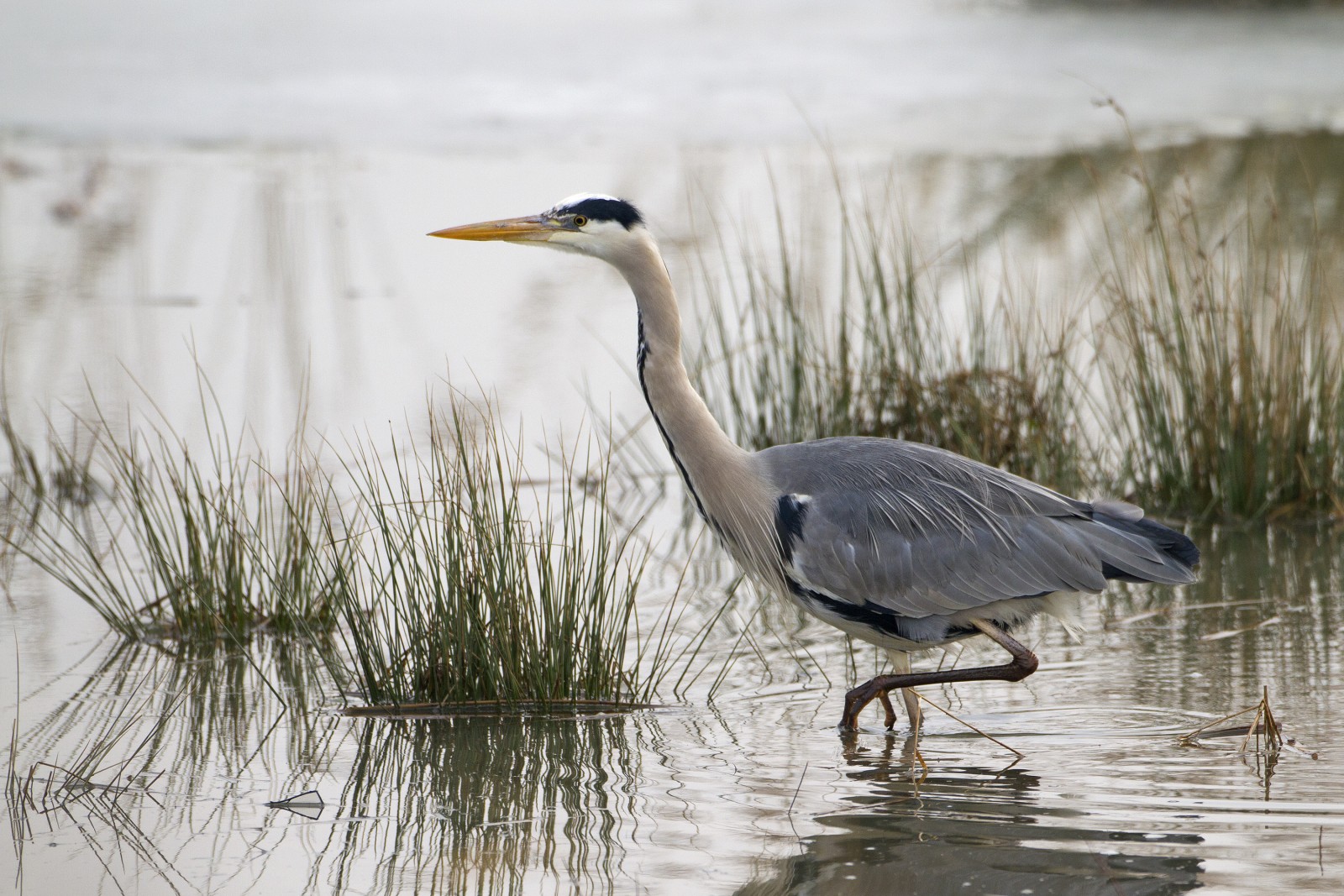
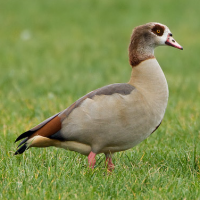
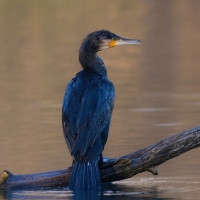
St James's Park is a 23 hectare park in central London. The park is bounded by Buckingham Palace to the west, the Mall to the north, Horse Guards to the east, and Birdcage Walk to the south. The park has a small lake with two islands, West Island and Duck Island, the latter named from the lake's collection of captive waterfowl. The majestic fountain protects Duck Island, which Grey Heron and Great Cormorant use as refuge. Among the wild birds you can see are Greylag Goose, Mute Swan, Egyptian Goose, Northern Shoveler, Gadwall, Tufted Duck, Little Grebe, Great Crested Grebe, Common Wood Pigeon, Rock Dove, Eurasian Moorhen, Eurasian Coot, Common Snipe, Common Sandpiper, Black-headed Gull, Great Cormorant, Grey Heron, Sparrowhawk, Common Kingfisher, Eurasian Kestrel, Peregrine Falcon, Rose-ringed Parakeet, Eurasian Jay, Magpie, Eurasian Blue Tit, Blackcap, Eurasian Nuthatch, Mistle Thrush, Song Thrush, European Robin, Grey Wagtail and Pied Wagtail.
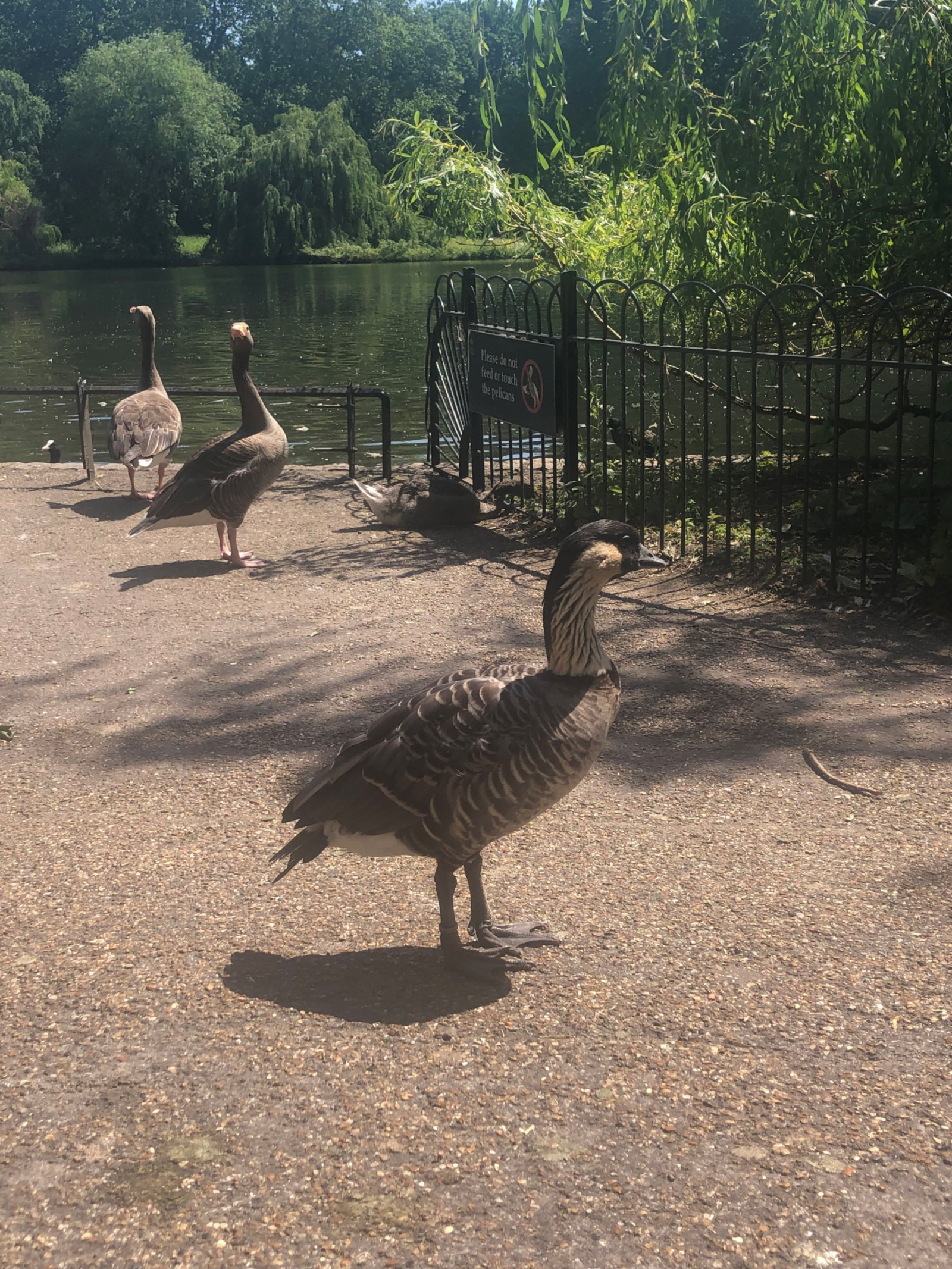
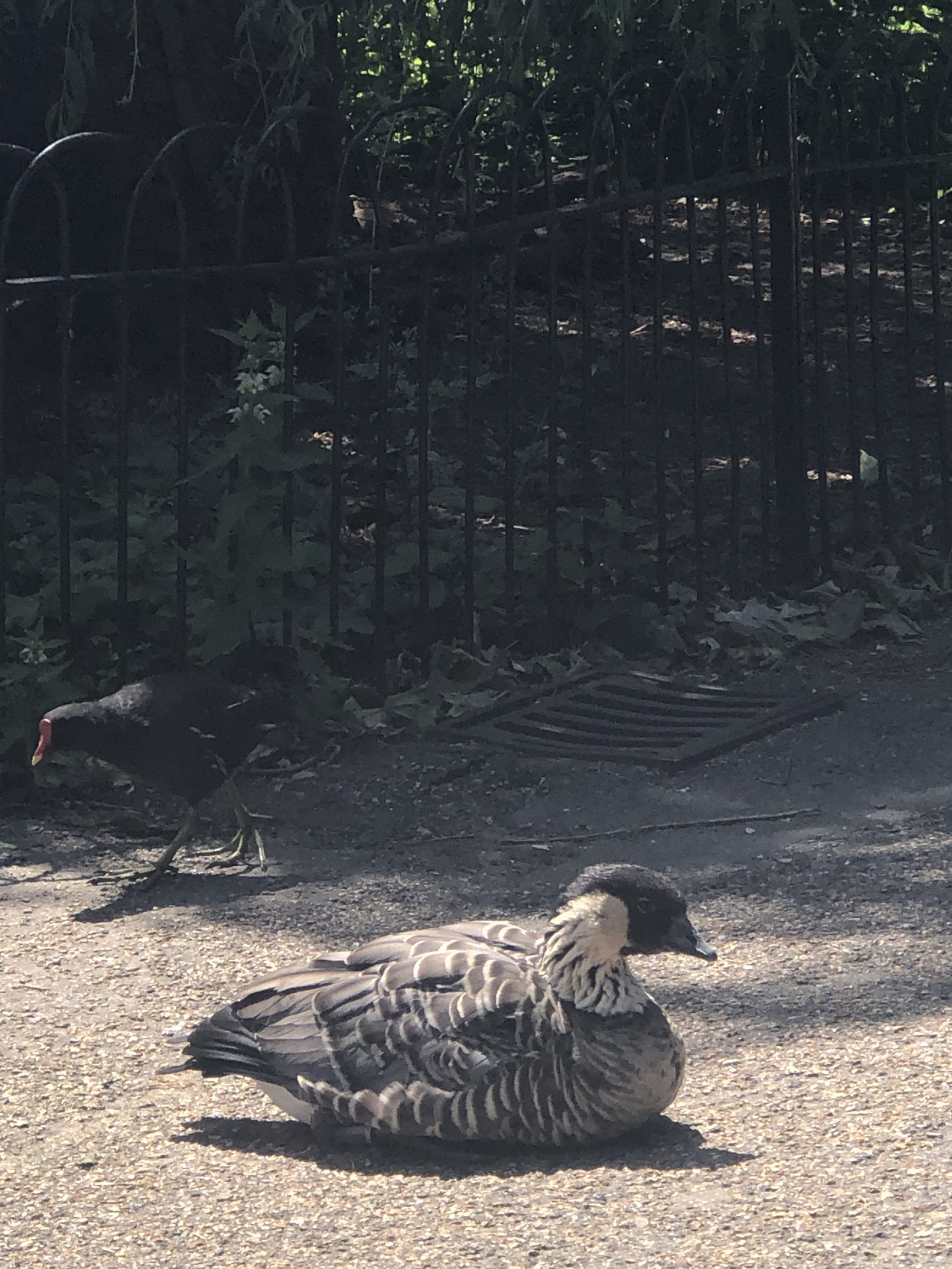
A resident colony of captive Great White Pelican has been a feature of the park since a Russian ambassador donated them to Charles II in 1664. Other captive birds, mostly distinguishable from wild birds by being pinioned (half of one wing amputated), include Hawaiian Goose, Bar-headed Goose, Snow Goose, Ross's Goose, Barnacle Goose, Red-breasted Goose, Ruddy Shelduck, Common Shelduck, Wood Duck, Eurasian Wigeon (occasional wild birds can occur), Northern Shoveler (occasional wild birds can occur), Eurasian Teal (occasional wild birds can occur, distinguishable by being full-winged), Northern Pintail (occasional wild birds can occur), Red-crested Pochard (occasional feral or wild birds can occur), Common Eider, and Smew. These captive birds are not included in the bird list below.
Details
Access
The London transport underground train (Green Park or St James Park) and bus. It is hard to find parking round there. You can cycle and walk around the park and view the lake perfectly. There are cafes to buy luxurious pastries.
 ) to insert bird names in your own language. The birdnames will automatically be translated for other users!